Compressor machine guide for manufacturing shops and production lines
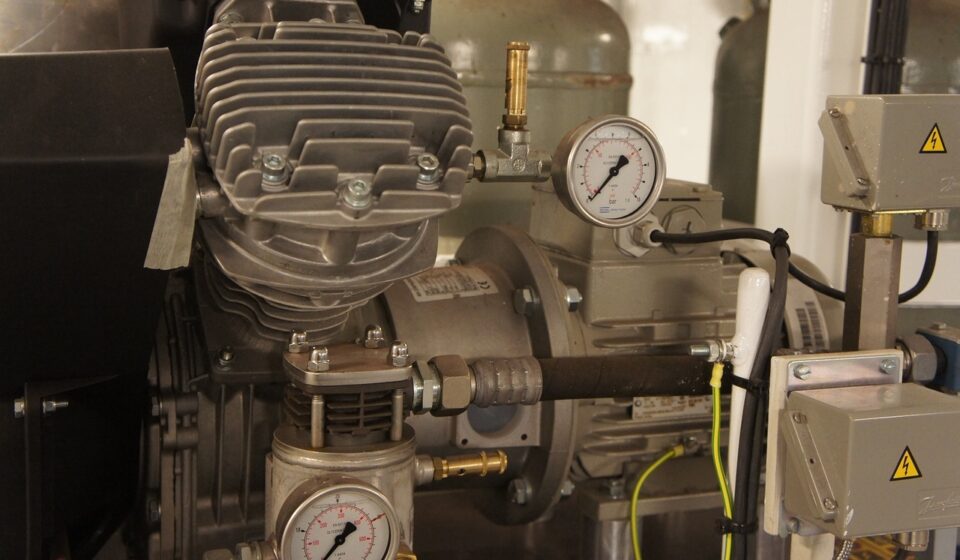
What a compressor machine does in a manufacturing facility
A compressor machine converts electrical power into stored pneumatic energy and supplies compressed air to tools, actuators, valves, cleaning stations, conveying systems and production equipment. In manufacturing, the right choice is rarely the unit with the highest horsepower rating. It depends on required flow, operating pressure, duty cycle, air purity, control method, storage volume and losses in the distribution system.
In many shops, the largest cost is not the compressor purchase price. It is the electricity used over years of operation. For that reason, a compressor should be selected as part of a complete air system, not as a standalone machine. If a facility runs machining centers, pneumatic clamping, packaging lines or automated handling, compressor selection belongs in the same planning process as other machine tools and plant utilities. Natural Resources Canada describes compressed air as stored energy used to operate machinery, equipment and processes, and notes that the system should be measured and baselined because both cost and reliability are involved. (prod-natural-resources.azure.cloud.nrcan-rncan.gc.ca)
The practical rule is simple: define the demand profile and air quality requirement first, then compare technologies, controls and lifecycle cost. Oversizing can increase unloaded running time. Undersizing can lead to pressure drops, weak tool performance and production interruptions.
Main compressor machine types used around machine tools
Industrial air compressors fall into two broad families: positive displacement and dynamic. Positive displacement machines trap a volume of air and mechanically reduce that volume to raise pressure. Dynamic compressors add velocity to air and then convert that velocity into pressure. For small and medium manufacturing plants, rotary screw and reciprocating compressors are usually the most familiar options. Centrifugal compressors are more common in high-flow centralized systems. Natural Resources Canada identifies rotary screw, vane and reciprocating compressors as common positive displacement types in small and medium industries. (prod-natural-resources.azure.cloud.nrcan-rncan.gc.ca)
| Compressor type | Where it fits | Key selection note |
|---|---|---|
| Reciprocating compressor | Intermittent use, maintenance areas, smaller shops and high-pressure needs | Good for lower duty cycles, but noise, vibration and maintenance should be considered. |
| Rotary screw compressor | General manufacturing, CNC support equipment, assembly lines and continuous plant air | Often suitable for steady industrial demand; control strategy and part-load efficiency matter. |
| Oil-free compressor | Food, pharmaceutical, electronics, finishing and processes sensitive to oil carryover | Useful when air purity risk outweighs higher purchase or operating cost. |
| Centrifugal compressor | Large plants with high, relatively stable air demand | Needs careful application and control to avoid inefficient operation at low load. |
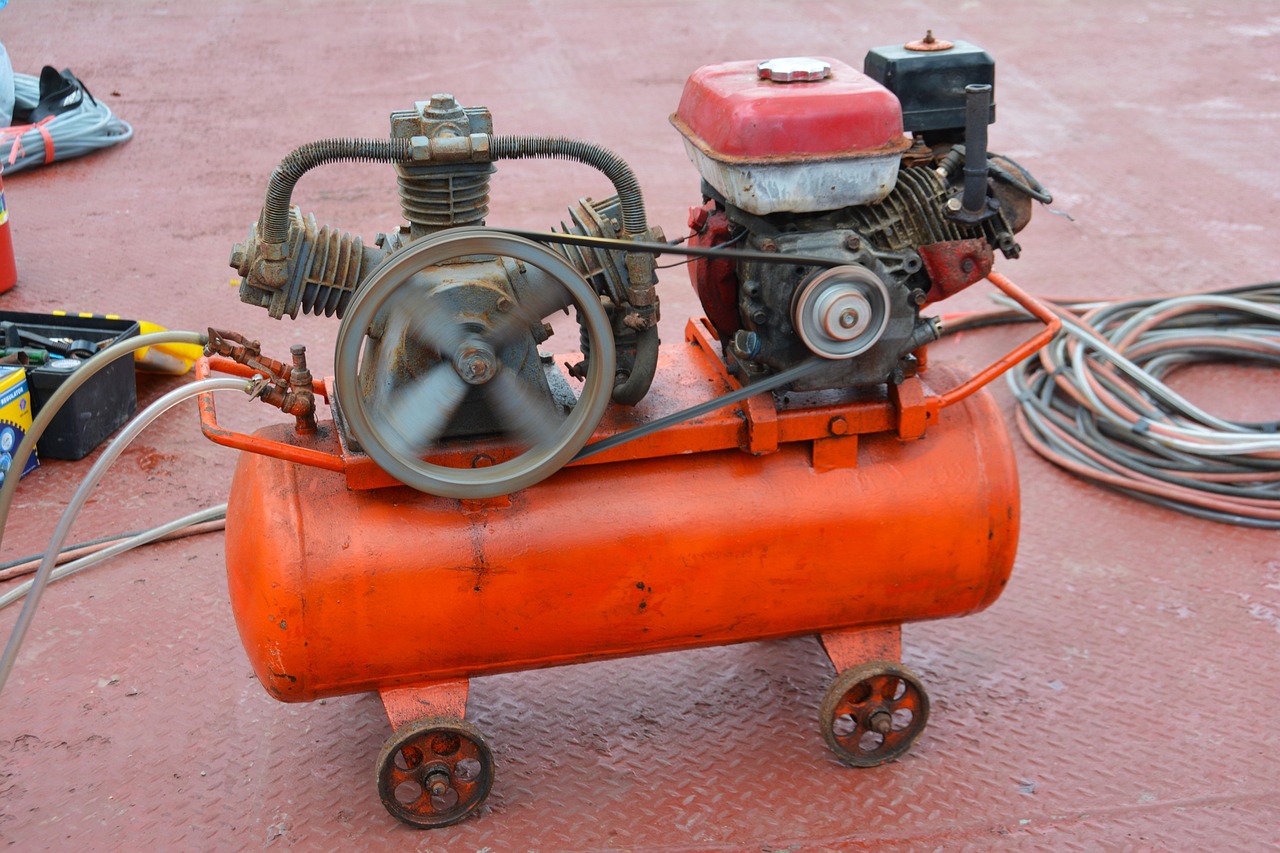
| Portable compressor | Construction, field service and temporary pneumatic work | Mobility and fuel or power availability matter more than plant integration. |
For machine shops, rotary screw units are often considered when several machines need air throughout the day. Reciprocating compressors may still be practical for maintenance tools, small fabrication areas or backup service. The better question is not which technology sounds more advanced, but which one matches the plant’s duty cycle and demand swings.
How to size a compressor without buying excess capacity
Start with flow, pressure and duty cycle
Compressor sizing begins with air flow, usually expressed as cfm or scfm, and pressure, usually expressed as psi or bar. Flow tells you how much air the system must supply. Pressure tells you the force needed at the point of use. A machine may require a specific inlet pressure, but losses through filters, dryers, valves, hoses and piping mean the compressor discharge pressure often has to be higher than the tool requirement. Natural Resources Canada provides a rule of thumb that one horsepower of compressor nameplate capacity produces about 4 scfm, but this should not replace verified manufacturer data or a measured air audit. (prod-natural-resources.azure.cloud.nrcan-rncan.gc.ca)
Duty cycle is just as important. A compressor feeding intermittent air guns and maintenance tools has a different operating profile from one feeding robotic grippers, pneumatic cylinders and continuous packaging equipment. If demand changes sharply by shift, batch or machine cycle, controls and storage may matter more than a simple horsepower increase.
Account for receivers, piping and pressure drop
A receiver tank stores compressed air and helps stabilize pressure during short demand peaks. Distribution piping then carries air to points of use. Poorly sized piping, long hose runs, clogged filters and unnecessary quick couplers can all create pressure drop. When operators see low pressure at a machine, the first reaction is often to raise compressor pressure. That may restore tool performance temporarily, but it can also increase energy use and leak flow across the entire system. A better approach is to measure pressure at the compressor, after treatment equipment and near critical use points.
Define air quality before selecting dryers and filters
Moisture, oil and particles can damage pneumatic components, affect surface finishing and shorten tool life. ISO 8573-1:2010 specifies compressed air purity classes for particles, water and oil, and also identifies gaseous and microbiological contaminants. The ISO page lists the 2010 edition as published and notes that the standard is subject to review. (iso.org)
A general machine shop may only need dry, filtered plant air. A painting, electronics or food-related process may need much tighter control. Over-treating every branch of the air system can waste pressure and money, so many plants use point-of-use filtration or dedicated clean-air branches for sensitive equipment.
Energy and lifecycle cost are the real selection criteria
Compressed air is convenient, but it is an expensive utility. Natural Resources Canada states that, over the first ten years of a typical air-cooled compressor in two-shift operation, operating cost and maintenance can represent about 88% of total lifetime cost, with electricity shown as 76% of ownership cost in its example. The same guide also explains that a typical compressed air end use may require about 10 units of electrical input to produce one unit of mechanical output at the work. (prod-natural-resources.azure.cloud.nrcan-rncan.gc.ca)
This changes the buying logic. A lower purchase price can become expensive if the machine wastes power at part load, requires excessive pressure or forces another compressor to run unnecessarily. Facilities should compare specific power, expected annual run hours, controls, service intervals, dryer pressure drop and realistic leak load. The Compressed Air & Gas Institute says its Performance Verification Program validates manufacturer claims for rotary compressor and refrigerated dryer performance, and describes power per flow data as a useful comparison point when evaluating compressors. (cagi.org)
Leaks are one of the clearest examples of lifecycle cost hidden in day-to-day operation. Natural Resources Canada says it is not unusual for 20% to 30% of compressor output to be lost through leaks in typical industrial facilities, while proactive leak management can reduce leaks to less than 10% of plant compressed air production. (prod-natural-resources.azure.cloud.nrcan-rncan.gc.ca)
| Selection question | Why it matters | Practical action |
|---|---|---|
| What is the measured peak and average demand? | Prevents oversizing based on guesses. | Log flow and pressure during normal production and peak periods. |
| How much air is lost when production is stopped? | Reveals leak load and open drains. | Perform off-shift leak checks and tag repairs. |
| Does the load vary through the day? | Determines whether fixed speed, VSD or multiple compressors make sense. | Match controls to the demand profile instead of buying by horsepower alone. |
| What air quality is actually required? | Avoids both contamination risk and excessive pressure drop. | Define ISO class targets by process or production area. |
Controls and configuration matter as much as horsepower
Two compressors with the same rated horsepower can produce very different operating costs if their controls do not match demand. Start/stop control can be useful for small, low-duty applications, but frequent cycling can be hard on motors. Load/unload control keeps the motor running while the compressor is unloaded. The U.S. Department of Energy sourcebook explains that unloaded rotary screw compressors may still consume 15% to 35% of full-load horsepower while delivering no useful air. (energy.gov) See also: cnc and robotics.
Variable speed drive compressors can be effective when air demand varies within the drive’s efficient control range. They are not automatically the right answer for every plant. CAGI’s rotary compressor selection guidance notes that VSD compressors can use 3% to 5% more power than similar fixed-speed machines at full load because of drive losses, and it describes VSD units as commonly applied as trim compressors rather than full-load base machines. (cagi.org)
A common manufacturing configuration is to use one fixed-speed compressor for base load and one VSD compressor to trim variable demand. In a larger plant, a master controller may coordinate multiple compressors so the machines do not fight each other across overlapping pressure bands. Storage receivers and pressure-flow controls can also reduce rapid cycling and protect critical machines from short pressure dips.
Installation, maintenance and safety checks
A compressor machine needs clean intake air, adequate ventilation, condensate management, correct electrical supply and accessible service space. Heat is a byproduct of compression, so a poorly ventilated compressor room can reduce reliability. Condensate should be drained and handled according to the site’s environmental and oil-water separation requirements. Filters and dryers must also be maintained. Clogged elements increase pressure drop and can push operators to raise system pressure unnecessarily.
Safety deserves the same attention as performance. Under 29 CFR 1910.242(b), compressed air used for cleaning in general industry must be reduced to less than 30 psi and used only with effective chip guarding and personal protective equipment. OSHA interpretation material also warns against using compressed air to clean a person’s body or clothing because of eye, respiratory and other injury risks. (law.cornell.edu)
For shops that use air to clear chips from fixtures or parts, this means nozzles, pressure reduction, shielding and PPE should be reviewed before the practice becomes routine. In many cases, vacuum systems, chip conveyors, brushes or low-pressure blowers may be safer and more efficient for cleaning tasks.
A practical buying checklist for factories
- Measure current demand instead of relying only on connected equipment nameplates.
- Separate average demand, peak demand and non-production leak load.
- Confirm the required pressure at the farthest and most critical points of use.
- Define air purity targets for each process before choosing dryers and filters.
- Compare compressor data by flow, pressure and specific power, not horsepower alone.
- Decide whether the demand profile favors fixed speed, VSD, multiple compressors or added storage.
- Check whether heat recovery, automatic drains, flow meters and leak monitoring are justified.
- Plan maintenance access, ventilation, spare parts and service capability before installation.
- Review compressed air cleaning practices for pressure reduction, chip guarding and PPE.
The strongest purchasing decision is usually not the biggest compressor machine. It is the system that delivers the required air at the lowest stable pressure, with verified air quality and manageable maintenance. In manufacturing, compressed air should be treated as a controllable production utility rather than an unlimited background resource.
Frequently asked questions
Is a compressor machine the same as an air compressor?
In most manufacturing searches, the terms refer to the same core equipment: a machine that compresses air and supplies it to tools, actuators or processes. In a complete plant system, however, the compressor is only one part. Dryers, filters, receivers, drains, piping and controls all affect performance.
Should a machine shop choose a rotary screw or reciprocating compressor?
A reciprocating compressor can be practical for intermittent use, smaller shops or maintenance tasks. A rotary screw compressor is often better suited to continuous plant air. The final choice should be based on measured flow, run hours, duty cycle, noise limits, maintenance capability and future expansion.
Is a VSD compressor always more efficient?
No. A VSD compressor can save energy when demand varies within its efficient turndown range. If the plant has a nearly constant full-load demand, a properly sized fixed-speed compressor may be competitive or better. Many systems use VSD as a trim machine rather than the main base-load unit.
How often should compressed air leaks be checked?
Leak checks should be part of routine maintenance and should also be performed after piping changes, equipment moves or production expansion. Off-shift inspections are useful because leaks are easier to hear and measure when normal demand is low.
What should be fixed before buying a larger compressor?
Before adding capacity, check leaks, pressure drop, clogged filters, inappropriate air uses, open manual drains and poor controls. If these issues are ignored, a larger compressor may only increase operating cost while hiding the original system problem.