Production machinery and equipment planning for tooling and inspection
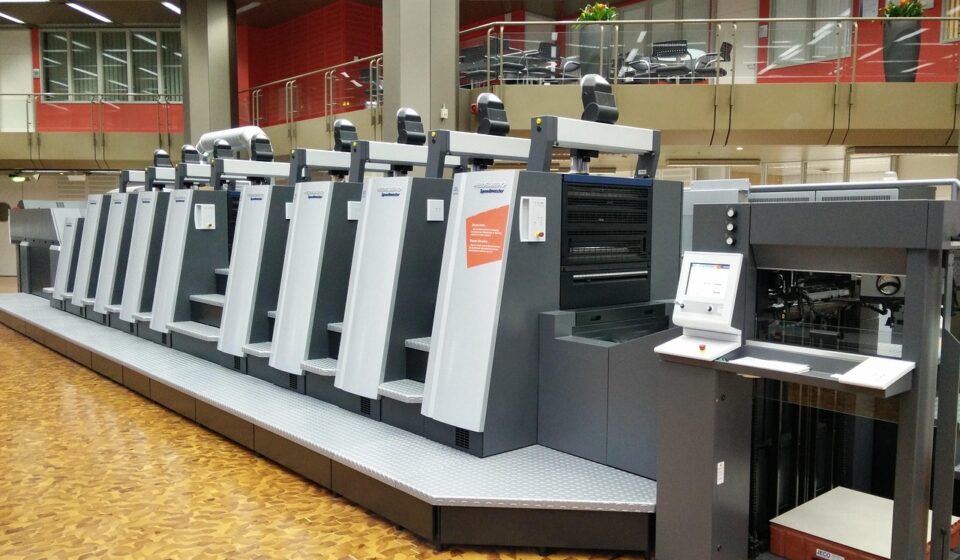
Production machinery and equipment decisions should not stop at spindle speed, tonnage, axis travel, or quoted cycle time. For tooling and inspection teams, a sound equipment plan connects the machine tool, workholding, cutting tools, automation, measurement strategy, safety controls, maintenance resources, and production data before the purchase order is issued. Public manufacturing outlooks in 2026 point toward more automation, more connected equipment, and stronger demand for people who can maintain and verify production systems. The practical takeaway is straightforward: a machine should be evaluated as part of a controlled manufacturing process, not as a standalone asset. It must be able to make, measure, trace, and improve parts repeatedly.
For more context on related shop-floor topics, see the tooling and inspection section.
What counts as production machinery and equipment
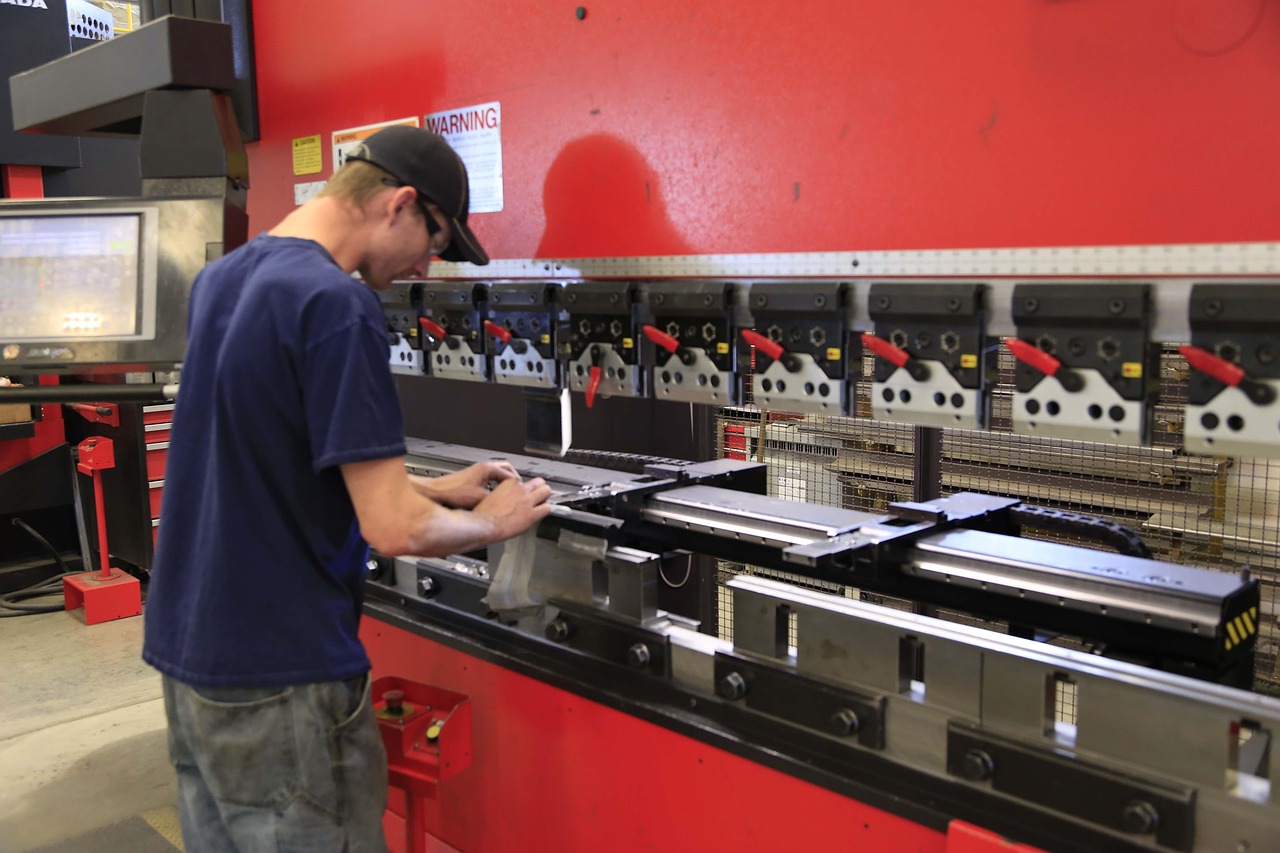
In a manufacturing environment, production machinery and equipment includes the physical assets that convert material into finished or semi-finished parts, along with the support systems that make that conversion repeatable. In metalworking and mechanical manufacturing, this often includes CNC machining centers, turning centers, presses, grinders, gear machines, additive manufacturing systems, deburring units, washers, robots, conveyors, tool presetters, fixtures, gages, coordinate measuring machines, optical inspection systems, and data collection devices.
For tooling and inspection teams, the key point is that these assets do not operate in isolation. A five-axis machining center depends on validated fixtures, tool assemblies, CAM data, probing routines, coolant control, and downstream inspection capacity. A high-speed stamping line depends on die condition, material feed accuracy, press monitoring, lubrication, scrap handling, and in-process checks. A CMM depends on stable part presentation, controlled temperature, calibrated probes, and inspection programs that reflect current design requirements.
That is why equipment planning should begin with the full process route. The question is not only, “Can this machine make the part?” It is also, “Can the complete system make the part repeatedly, safely, economically, and with evidence that the part meets requirements?”
Why equipment planning is becoming more data-driven
Several public sources published in 2026 show why equipment decisions are increasingly tied to data readiness. The U.S. Bureau of Labor Statistics reported in May 2026 that industrial machinery mechanics were projected to add 41,200 manufacturing jobs from 2024 to 2034, linking the increase to continued adoption of automated manufacturing machinery and the need to maintain and repair production equipment. This does not mean every factory will automate at the same pace. It does show, however, that maintenance and technical capability are becoming central to equipment value.
PwC’s Global Industrial Manufacturing Sector Outlook, released on February 27, 2026, reported that surveyed industrial manufacturers expected the median share of highly automated key processes to rise from 18% to 50% by 2030. The same report defined industrial manufacturing broadly around machinery, equipment, components, and integrated systems. This is useful context for tooling and inspection leaders because automation does not remove the need for process discipline; it raises the cost of weak discipline. A connected line can produce more parts faster, but it can also produce nonconforming parts faster if tooling offsets, inspection logic, or material controls are not stable.
NIST’s public Smart Manufacturing Systems Test Bed shows the same direction of travel. Its manufacturing lab includes CNC milling and turning equipment, CMMs, and digital micrometers, with data collected through MTConnect. The practical lesson is that modern production equipment is increasingly expected to communicate condition, performance, and quality information across the lifecycle, not just execute a program.
Selection criteria that connect machining, tooling, and inspection
A useful equipment evaluation starts with technical capability, but it should not end there. The following decision matrix organizes common equipment categories around the questions that matter most to tooling and inspection teams.
| Equipment area | Key evaluation questions | Main risk if ignored |
|---|---|---|
| Machine tools and forming equipment | Can the equipment hold required tolerances under real production loads, materials, thermal conditions, and fixture constraints? | Quoted accuracy may not translate into stable process capability. |
| Tooling and workholding | Are fixtures, dies, cutting tools, holders, and presetting methods included in the process plan from the start? | Cycle time gains can be lost to setup variation, tool runout, or poor datum control. |
| Inspection equipment | Can inspection systems verify the critical characteristics at the needed speed, resolution, and repeatability? | Parts may be produced faster than quality teams can measure or contain them. |
| Automation and handling | Does automation preserve part orientation, datum integrity, cleanliness, and access for inspection? | Robots and conveyors may introduce handling damage, mix-ups, or hidden variation. |
| Cleaning, deburring, and support systems | Are burr control, washing, drying, filtration, and environmental requirements matched to the inspection method? | Residual chips, films, or burrs can cause false inspection results or assembly failures. |
| Data and software integration | Can machine, tool, inspection, maintenance, and production data be connected without manual re-entry? | Disconnected systems make traceability slow, incomplete, or unreliable. |
The matrix also explains why the cheapest equipment option is not always the lowest-cost process. A machine with strong nominal capability may still be a poor fit if it requires maintenance skills the plant cannot support, if inspection becomes the bottleneck, or if the equipment cannot provide usable production data.
Standards and compliance checkpoints
Standards are not a substitute for engineering judgment, but they help teams avoid preventable ambiguity. In U.S. general industry, OSHA’s machine guarding requirement at 29 CFR 1910.212 requires one or more guarding methods to protect operators and other employees from hazards such as point of operation, ingoing nip points, rotating parts, flying chips, and sparks. For anyone specifying production machinery, guarding should be reviewed during layout and acceptance planning, not added as an afterthought after installation.
Design and inspection teams should also align on the drawing and product definition standards that govern acceptance. ASME Y14.5-2018 remains a widely used reference for geometric dimensioning and tolerancing in U.S.-oriented mechanical design documentation, while ASME’s Y14 series also covers related drawing and digital product definition practices. If a supplier, buyer, and inspection lab interpret datums or modifiers differently, even a capable machine will not prevent disputes.
For quality systems, ISO 9001:2015 received Amendment 1 in 2024 addressing climate action considerations in the organizational context and interested-party requirements. This does not turn every equipment purchase into an environmental project, but it does reinforce the need to consider operating context, risk, and stakeholder requirements in quality management planning.
Chemical and cleaning choices can also affect equipment planning. EPA’s 2024 final rule on trichloroethylene under TSCA set prohibitions and phaseout dates for many uses, including industrial and commercial uses beginning in 2025, with some exemptions and litigation-related timing changes. Any operation that relies on solvent cleaning, vapor degreasing, or legacy chemical processes should verify the current regulatory status before specifying washers, degreasers, ventilation, or inspection procedures that depend on those chemicals. See also: cnc and robotics.
How to build an integrated equipment workflow
The most reliable way to plan production machinery and equipment is to work backward from product requirements while also following the production route step by step. The following workflow can be used by process engineers, manufacturing engineers, quality engineers, and sourcing teams.
- Define the critical characteristics. Identify the dimensions, surfaces, features, materials, cleanliness levels, and functional requirements that drive acceptance.
- Map the datum strategy. Confirm how the part is located in machining, forming, additive build, cleaning, and inspection. Datum changes are a common source of disagreement between production and quality teams.
- Match equipment capability to process capability. Do not rely only on catalog accuracy. Ask how capability will be demonstrated under production feeds, speeds, thermal conditions, tooling wear, and operator routines.
- Plan inspection with production volume in mind. A CMM may be ideal for first article and audit inspection, while in-process probes, air gages, optical systems, or functional gages may be needed for high-volume control.
- Include maintenance and calibration early. Decide who will service spindles, ballscrews, robot grippers, probes, sensors, gages, coolant systems, and safety devices. Equipment that cannot be maintained predictably will not stay capable.
- Connect data where it creates control. Prioritize useful signals such as tool life, alarm history, part counts, inspection results, offset changes, maintenance events, and nonconformance records.
- Run acceptance trials that reflect real production. Factory acceptance and site acceptance should include representative material, tooling, fixtures, inspection routines, safety checks, and documentation requirements.
This workflow also helps control scope creep. Not every plant needs a fully automated, fully integrated line. Some operations need better fixtures, clearer GD&T interpretation, improved gage repeatability, or more disciplined tool management before they need additional machines.
Common mistakes when upgrading equipment
Buying machine speed without inspection capacity
A faster machining or forming asset can expose a weak quality system. If inspection remains manual, slow, or poorly connected, the plant may simply move the bottleneck from production to quality control. Before buying faster equipment, estimate inspection load by feature, frequency, sampling plan, and reaction time.
Treating automation as a repair for unstable processes
Automation works best when the underlying process is already understood. Robots, feeders, and pallet systems can reduce labor variation, but they cannot fix poor tool life, weak workholding, unstable material, or ambiguous acceptance criteria. Stabilize the process first, then automate the parts of the process that are repeatable.
Ignoring the maintenance skill requirement
As equipment becomes more connected and automated, maintenance work increasingly includes sensors, drives, controls, networks, and software as well as mechanical repair. The BLS employment projection for industrial machinery mechanics is a reminder that advanced equipment needs people who can diagnose and restore it. Training, spare parts, vendor support, and documentation should be part of the purchase case.
Leaving data integration until after installation
Many plants discover too late that machines, gages, and enterprise systems identify jobs, tools, parts, and operations in different ways. ISA-95 is often used as a reference model for organizing the relationship between enterprise systems, manufacturing operations systems, and control-level equipment. Even if a plant does not implement every part of a formal architecture, it should define naming, equipment hierarchy, data ownership, and handoff points before commissioning.
A practical checklist for equipment buyers
- List the parts, materials, tolerances, volumes, and changeover requirements the equipment must support.
- Confirm which product definition standard, drawing revision, and inspection criteria will govern acceptance.
- Review guarding, ergonomics, lockout, access, chip control, coolant, mist, noise, and other safety factors during layout planning.
- Validate that tooling, fixtures, probes, gages, software, and post-processors are included in the real project budget.
- Ask suppliers to demonstrate capability with representative material, tooling, and inspection methods.
- Define calibration, preventive maintenance, spare parts, and response-time expectations before launch.
- Decide which production and quality data must be captured automatically and which can remain manual.
- Verify cleaning and chemical assumptions, especially if the process relies on regulated solvents or residue-sensitive inspection.
- Document acceptance tests for cycle time, dimensional capability, surface finish, uptime, safety functions, and data outputs.
- Plan operator, setup, maintenance, and quality training as part of the equipment launch, not as a post-launch correction.
Frequently asked questions
What is the difference between production machinery and tooling?
Production machinery is the main equipment that performs manufacturing operations, such as machining, forming, molding, welding, cleaning, or assembly. Tooling is the set of process-specific devices that allow the machinery to make a particular part, including cutting tools, dies, molds, fixtures, jigs, holders, and gages. The two should be specified together because tooling quality often determines whether the machine can achieve repeatable results.
Why should inspection be considered before buying equipment?
Inspection determines whether the process can prove conformance. If inspection equipment, gaging strategy, or data handling is not planned early, a plant may create a production system that makes parts faster than it can verify them. Early inspection planning also clarifies datum strategy, feature access, sampling frequency, and the level of automation needed for quality control.
Does every manufacturer need smart manufacturing technology?
No. The right level of connectivity depends on product risk, production volume, customer requirements, and available skills. A low-volume job shop may get more value from disciplined setup sheets and calibrated gages than from a complex data platform. However, as automation increases, basic data discipline becomes more important for traceability, maintenance, and process improvement.
How should smaller manufacturers approach equipment upgrades?
Smaller manufacturers should start with the constraint that most affects delivery, quality, or cost. That may be an old machine, but it may also be weak fixturing, slow inspection, inconsistent tool management, or limited maintenance coverage. A phased plan that improves process stability first usually produces better results than a large equipment purchase built on uncertain assumptions.