How to choose a saw machine for machine shop productivity and safety
What a saw machine needs to do for your shop
A saw machine is often the first controlled cutting step before machining, welding, assembly, or secondary finishing. The right choice depends on the material, cross-section, production volume, accuracy requirement, handling method, and the safety controls around the blade. For most machine shops and fabrication plants, the practical question is not which saw has the highest horsepower. It is which machine can cut the required stock consistently, hold the needed tolerance, reduce manual handling, and fit safely into the workflow.
Sawing also affects downstream productivity. A square, repeatable, low-burr cut can reduce milling time, fixture adjustment, rework, and scrap. A poorly matched saw machine can become a bottleneck even when machining centers, weld cells, or assembly stations are well organized. Readers comparing broader equipment categories can also review the related machine tools section for additional manufacturing context.
Main saw machine types and where they fit
Different saw designs solve different production problems. A shop cutting solid steel bar all day does not have the same requirements as a plant cutting aluminum extrusion, structural tube, composite panels, or hardwood components. The first selection step is to match the saw type to the material, stock shape, and cut pattern.
Band saw machines
Band saw machines use a continuous toothed blade running over wheels. They are common for cutting bar stock, billets, tubing, profiles, and bundles. Horizontal band saws are widely used in metalworking because they can handle large sections and are available in manual, semi-automatic, and automatic configurations. Vertical band saws are useful for contour cutting, toolroom work, and irregular shapes, although production straight cutting is more often handled by horizontal models.
Band saws are often chosen when material range and cutting capacity matter more than an extremely fine cut surface. Blade selection, tooth pitch, feed pressure, blade speed, coolant, and material clamping all influence cut quality. For mixed-material shops, a band saw can be flexible, but only if operators adjust speed and feed instead of using one setup for every alloy and cross-section.
Circular cold saws
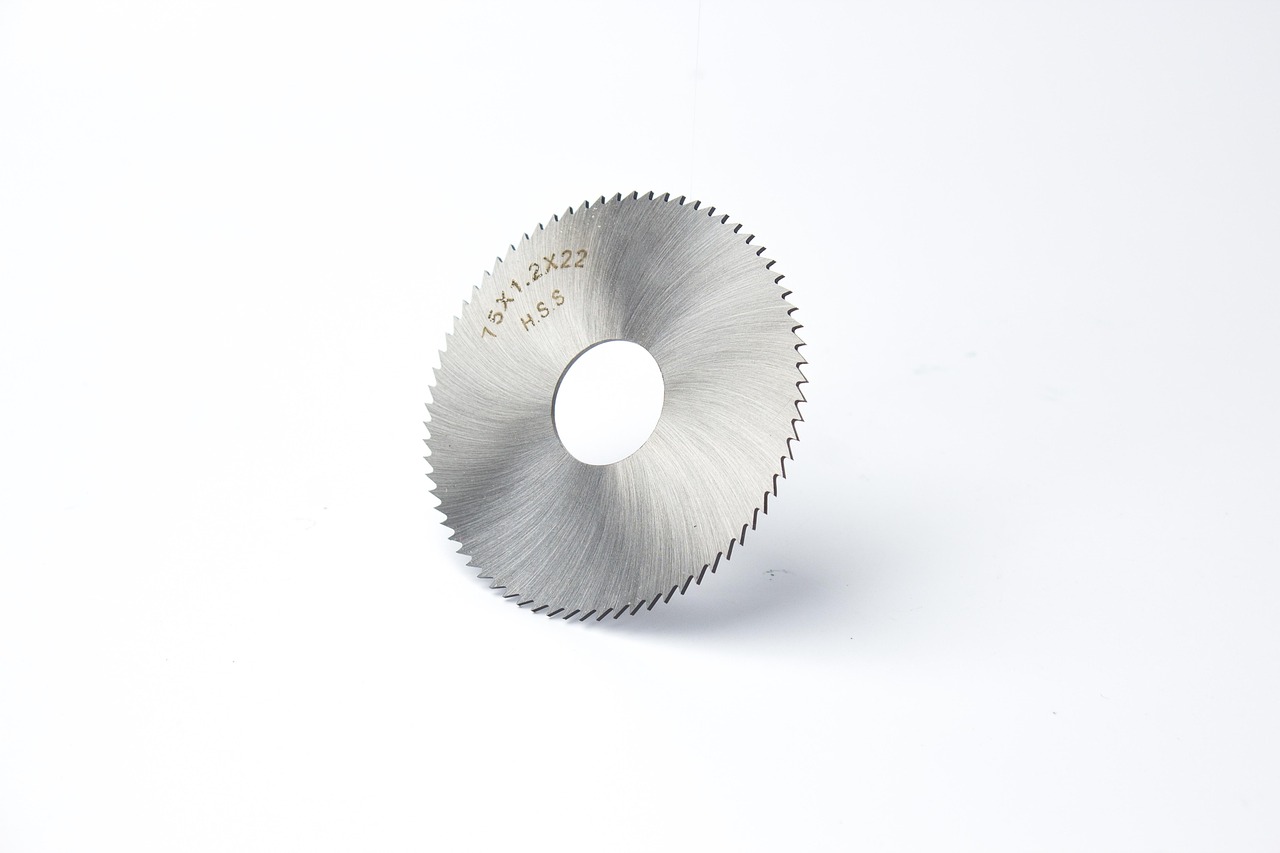
Circular cold saws use a rigid circular blade at controlled speed, often with coolant for metal cutting. They are valued for square cuts, repeatability, and cleaner finishes on suitable materials. Compared with many band saw applications, a cold saw can produce a cut face that needs less secondary machining. Capacity, however, is limited by blade diameter and machine design, so large sections may still favor a band saw.
Cold saws are particularly useful where length accuracy, miter consistency, and finish are important, such as tube fabrication, extrusion cutting, and parts preparation for welding or assembly. The tradeoff is that blades and setup practices must match the workpiece material. Incorrect blade geometry or speed can quickly reduce blade life.
Abrasive cut-off saws
Abrasive cut-off machines use a bonded abrasive wheel rather than a toothed blade. They can be useful for certain hard or difficult materials and for rough cutting where finish is not the main concern. The disadvantages are heat, sparks, wheel wear, dust, and a cut surface that may require more finishing. These machines require careful guarding, wheel inspection, and dust or spark control.
Woodworking and panel saw machines
For wood, engineered panels, plastics, and some composite materials, common choices include table saws, sliding table saws, panel saws, radial arm saws, and beam saws. Selection depends on sheet size, edge quality, cut-list complexity, dust collection, guarding, and operator training. Unlike many metal saws, woodworking saws often create high dust loads and kickback hazards, so machine guarding and material control are central to the buying decision.
| Saw machine type | Common use | Selection priority |
|---|---|---|
| Horizontal band saw | Bar, tube, billet, bundles, structural profiles | Capacity, blade speed range, clamping, automation |
| Vertical band saw | Contours, toolroom work, irregular cuts | Table size, blade guidance, operator visibility |
| Circular cold saw | Accurate metal tube, bar, extrusion cutting | Cut finish, miter repeatability, blade rigidity |
| Abrasive cut-off saw | Rough cutting and hard-material applications | Wheel safety, spark control, ventilation |
| Panel or table saw | Wood, panels, plastics, composites | Guarding, dust collection, sheet handling |
Specifications that affect throughput and cut quality
Machine brochures often emphasize maximum capacity, but real productivity comes from the whole cutting system. A saw that can technically accept a large workpiece may still cut slowly if the motor, blade, vise, coolant system, or chip removal design is not suited to the job. Buyers should compare the specifications that directly influence daily output.
Capacity and work envelope
Capacity should be checked against the largest real workpiece, not only the largest theoretical dimension. Round bar, square tube, rectangular stock, angle, channel, and bundles all sit in the vise differently. If miter cutting is required, capacity normally decreases at angle. A machine that handles a 300 mm round at 90 degrees may not handle the same section at 45 degrees.
For long material, infeed and outfeed support are as important as the saw frame. Roller conveyors, measuring stops, powered feed tables, or bundle-loading equipment may be required to prevent inaccurate cuts and unsafe lifting practices.
Blade speed, feed control, and material range
Blade speed should match the material. Aluminum, mild steel, stainless steel, tool steel, and non-metallic materials may need different speeds and tooth forms. A variable-speed saw offers flexibility for mixed work, while a fixed-speed machine may be acceptable for a narrow production range.
Feed control affects both cycle time and blade life. Too aggressive a feed can strip teeth, overload the motor, or create a crooked cut. Too light a feed can rub the blade, generate heat, and reduce productivity. Automatic feed systems can improve consistency, but they do not remove the need for correct blade selection and maintenance.
Accuracy, burr, and cut-face requirements
The required tolerance should be defined before purchase. Some operations only need a blank cut slightly oversize before machining. Others need near-final length, a square face, and minimal burr. If the next process is CNC machining, the saw may only need repeatability and allowance control. If the next process is welding or direct assembly, squareness and edge condition may matter more.
| Specification | Why it matters | Question to ask before buying |
|---|---|---|
| Maximum cut size | Determines whether real parts fit the machine | Does capacity still meet needs during miter cuts? |
| Blade speed range | Controls suitability for different materials | Can the saw run correct speeds for stainless, aluminum, and mild steel? |
| Feed control | Affects cut time, straightness, and blade life | Is feed manual, hydraulic, servo-controlled, or programmable? |
| Clamping system | Prevents movement, vibration, and crooked cuts | Can it hold thin-wall tube, bundles, and short remnants safely? |
| Coolant and chip removal | Reduces heat and clears chips from the cut | Is the system adequate for the material and duty cycle? |
| Length control | Improves repeatability and reduces scrap | Does the machine need a manual stop, digital readout, or automatic feeder? |
Automation, fixturing, and handling choices
Automation should be selected around the actual production pattern. A manual saw may be economical for repair work, prototype shops, and low-volume fabrication. A semi-automatic saw can reduce operator fatigue by controlling clamping, cutting, and head return. A fully automatic saw machine can index material, repeat programmed cut lengths, and run batches with less direct operator involvement.
The value of automation increases when parts are repetitive, material is heavy, or labor availability is limited. Automation also adds setup requirements. A shop that changes material size every few cuts may not benefit from a complex automatic system unless setup is fast and the controls are practical for the operators using them.
Material handling can be the hidden bottleneck
Many saw purchases underperform because the machine is upgraded but the surrounding handling remains unchanged. Long bar stock requires stable support. Heavy billets may need cranes, forklifts, bundle loaders, or powered conveyors. Finished parts need a clear discharge area so they do not block the outfeed side. If operators must lift, rotate, and measure every piece manually, the saw’s rated cutting speed may not translate into real throughput. See also: cnc and robotics.
Fixturing and clamping affect safety as well as accuracy
Good clamping prevents vibration, blade deflection, and workpiece movement. For tubing and extrusions, pressure must be enough to hold the part without crushing it. For bundles, top clamps or nesting fixtures may be needed. Short remnants deserve special attention because they are harder to control and can tempt operators to place hands too close to the blade.
Before choosing a machine, list the smallest, largest, thinnest, and most awkward workpieces expected in normal production. If the supplier cannot explain how each will be clamped and supported, the risk of downtime and unsafe workarounds increases.
Safety, standards, and maintenance checks
Saw machines expose operators to rotating blades, moving vises, falling stock, chips, sparks, dust, noise, electrical equipment, and stored energy. Safety should be reviewed before purchase, not added after installation. In the United States, OSHA machine guarding guidance emphasizes protection from hazards such as the point of operation, rotating parts, ingoing nip points, flying chips, and sparks. OSHA woodworking guidance also highlights the need for appropriate guards, power controls, and safe work practices around saw blades.
For metal sawing machines, ISO 16093:2017 addresses safety for sawing machines used to cut cold metal and was confirmed by ISO in 2022. ANSI B11.10 is commonly referenced for metal sawing machine safety in the United States. NFPA 79 covers electrical equipment for industrial machinery and is often relevant when evaluating machine electrical panels, emergency stop circuits, and industrial control systems. These references do not replace a site-specific risk assessment, but they provide useful checkpoints for discussions with suppliers, safety managers, and integrators.
Pre-purchase safety checklist
- Confirm that the blade and unused blade path are guarded as far as practical for the operation.
- Check whether the operator can stop the machine without reaching across the cutting area.
- Verify emergency stop locations, reset behavior, and visibility from normal operating positions.
- Review interlocks, access panels, and procedures for blade changes, cleaning, and jam removal.
- Assess chip, spark, coolant mist, or dust control based on the material being cut.
- Plan lockout and maintenance access before installation.
- Confirm that manuals, labels, electrical documentation, and training materials are available in the required language for the workforce.
Maintenance factors that influence total cost
The purchase price is only one part of saw machine cost. Blade consumption, coolant, wheel maintenance, guide wear, hydraulic components, bearings, electrical parts, downtime, scrap, and labor all affect lifecycle value. A lower-priced machine can become expensive if it consumes blades quickly, cuts inaccurately, or lacks local service support.
Routine maintenance should include blade tension checks, guide inspection, coolant concentration control, chip brush inspection, vise alignment, conveyor inspection, and verification of guards and interlocks. For woodworking and panel saws, dust collection, splitter or riving knife condition, fence alignment, and anti-kickback devices should be included in the inspection plan.
| Cost factor | What to evaluate | Potential impact |
|---|---|---|
| Blade life | Blade type, speed, feed, coolant, operator practice | Consumable cost and downtime |
| Scrap rate | Length accuracy, squareness, repeatability | Material loss and rework |
| Labor | Manual handling, measuring, clamping, unloading | Throughput and fatigue |
| Service access | Local support, spare parts, documentation | Recovery time after failure |
| Safety controls | Guards, interlocks, stops, dust or chip control | Risk reduction and compliance readiness |
A practical selection framework
A structured selection process helps avoid buying too little machine or paying for unnecessary automation. Start with the cut list, not the catalog. Identify the most common material, the hardest material, the largest cross-section, the tightest length tolerance, the highest daily volume, and the most difficult handling condition. Then compare machines against that real workload.
For a repair shop or prototype department, flexibility and simple setup may outweigh maximum automation. A manual or semi-automatic band saw with variable speed and good material support may be enough. For a production machining cell cutting thousands of similar blanks, an automatic saw with programmable length control, bar feed, and chip management may pay back through labor savings and more consistent blanks.
For structural fabrication, miter accuracy, vise rigidity, and heavy material handling become central. For tube and extrusion work, a circular cold saw may be preferred when clean, square, repeatable cuts reduce downstream deburring or fitting. For woodworking and panel production, sheet handling, dust extraction, guarding, and cut-list workflow can matter more than motor size alone.
When comparing quotations, request sample cuts using the actual material or the closest available equivalent. Review the cut face, burr, length variation, cycle time, clamping marks, coolant behavior, and chip control. If a supplier’s demonstration uses easier material than your normal workload, treat the result as limited evidence rather than proof of production performance.
Frequently asked questions
What is the difference between a saw machine and a cutting machine?
A saw machine removes material with a toothed blade or abrasive wheel. A cutting machine is a broader term that may include lasers, plasma cutters, waterjets, shears, and other processes. Sawing is often preferred for stock preparation because it is mechanically simple, efficient for bars and profiles, and easy to integrate before machining or fabrication.
Is a band saw or circular cold saw better for metal cutting?
Neither is universally better. A band saw is usually more flexible for larger sections, varied stock shapes, and general-purpose cutting. A circular cold saw can be better when the workpiece fits within its capacity and the shop needs cleaner, more square, more repeatable cuts. The correct choice depends on material, section size, tolerance, finish, and volume.
How much automation does a saw machine need?
Automation is useful when cut lengths repeat, production volume is steady, material is heavy, or operator time is a constraint. Manual or semi-automatic machines can still be the better choice for maintenance shops, short runs, and frequent changeovers. The best decision compares labor, setup time, scrap, safety, and expected utilization rather than automation level alone.
What safety standards should be considered before installation?
For U.S. facilities, OSHA machine guarding requirements and relevant consensus standards should be part of the review. For metal sawing machines, ISO 16093:2017 and ANSI B11.10 are useful references, while NFPA 79 is relevant to industrial machinery electrical equipment. A qualified safety professional should confirm the final requirements for the specific machine, facility, and jurisdiction.