Lathe machine basics, types, operations, and safety considerations
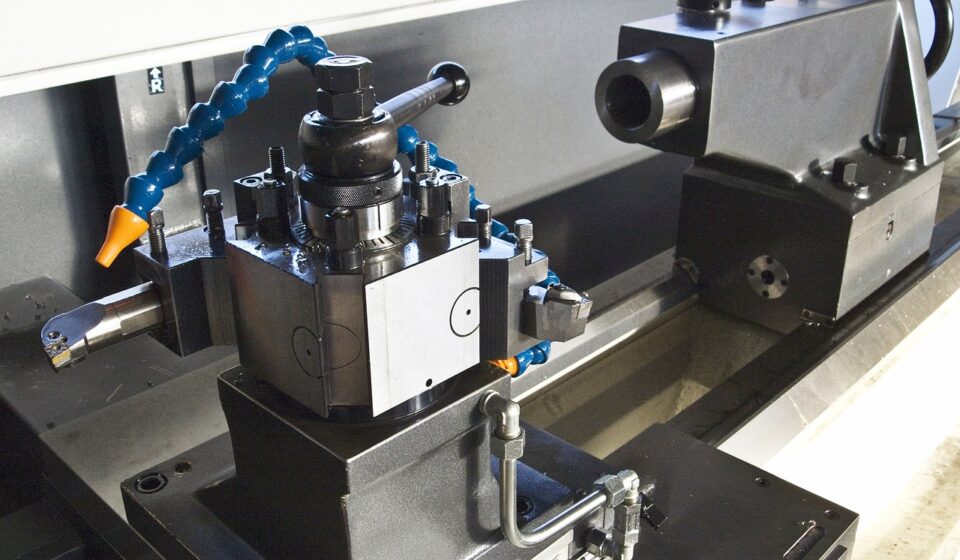
A lathe machine rotates the workpiece while a cutting tool, drill, boring bar, knurling tool, or forming tool removes or shapes material. In manufacturing, it is one of the core machine tools for shafts, bushings, threaded parts, rings, rollers, pulleys, and other components with rotational geometry. Manual lathes still have a clear role in repair work, training, one-off jobs, and low-volume production. CNC turning centers are better suited to repeatable batches, complex toolpaths, and automated workflows.
The right machine is not defined by the label alone. Part geometry, tolerance, material, batch size, workholding, tooling, guarding, and operator skill all affect whether a lathe setup will be productive and safe. Educational machine-shop sources describe lathe work as rotating the workpiece on its axis for operations such as cutting, facing, turning, drilling, knurling, and shaping. (engineering.oregonstate.edu)
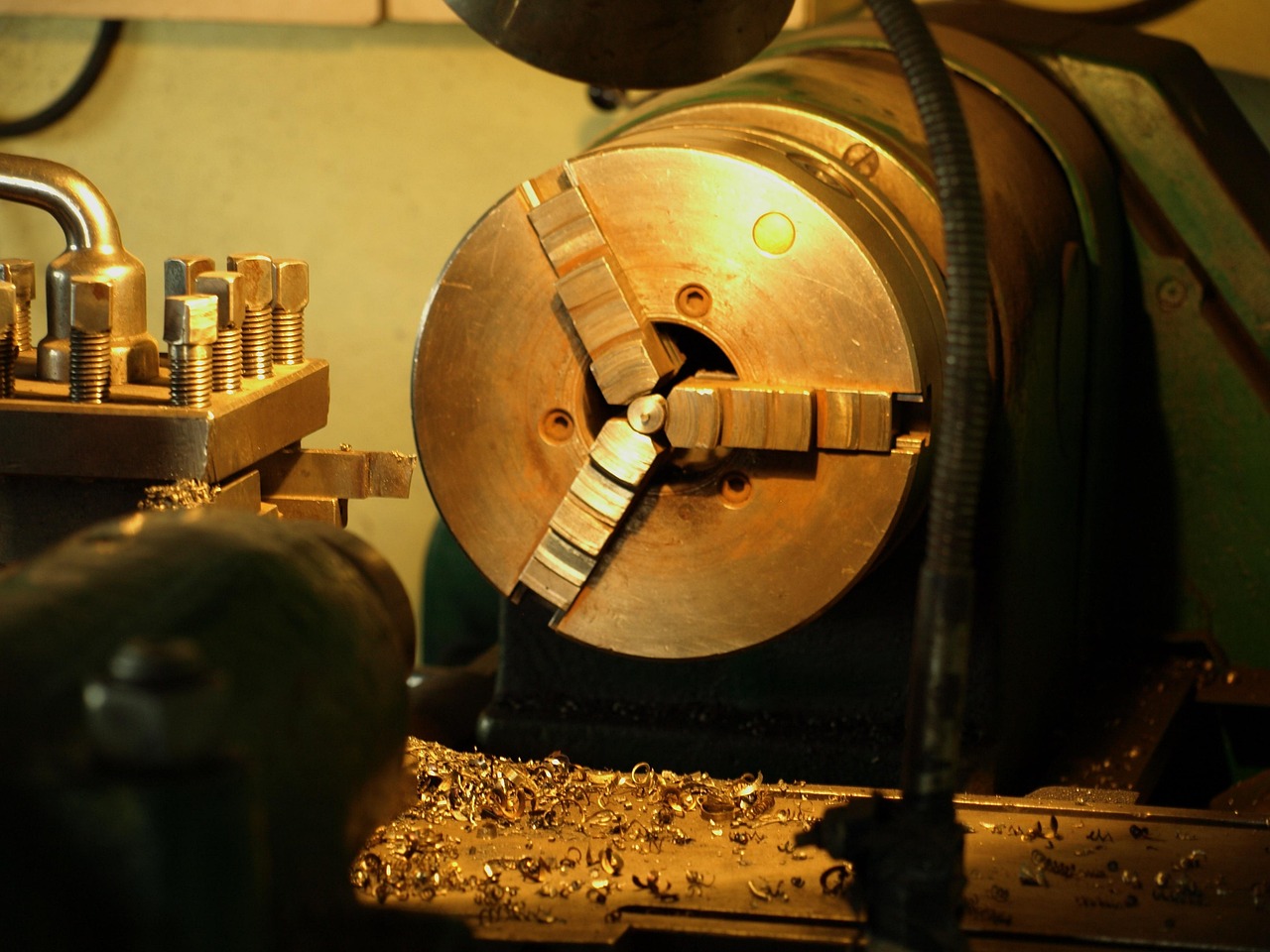
What a lathe machine does
The defining feature of a lathe is that the workpiece rotates. The cutting tool is fed into or along the rotating material to create cylindrical, conical, flat, grooved, threaded, or internal features. This separates lathe work from many milling operations, where the cutting tool usually rotates and the workpiece is fixed or moved on a table.
In a metalworking shop, turning is commonly used when a part has a clear center axis. Examples include motor shafts, bearing seats, pins, sleeves, pipe fittings, threaded studs, valve components, and custom spacers. Wood lathes and special-purpose lathes use the same rotating-workpiece principle, but metal lathes place greater demands on rigidity, cutting speed, feed rate, tool geometry, chip control, coolant use, and measurement.
A lathe machine is not limited to simple round parts. With the right tooling and setup, it can face an end surface, reduce outside diameter, cut tapers, drill on center, bore internal diameters, cut grooves, part off finished pieces, and generate threads. Modern CNC turning centers may also add live tooling, sub-spindles, Y-axis motion, bar feeders, probes, and part catchers, allowing some parts to be completed with fewer setups.
Main assemblies and motion in a lathe machine
Although designs vary, most engine lathes and CNC turning machines share the same basic functional assemblies. Knowing what each assembly does helps buyers and operators evaluate real capability instead of relying only on swing, bed length, or spindle horsepower.
- Bed: The main structure that supports the carriage, headstock, tailstock, and other moving components. Rigidity and alignment directly affect accuracy.
- Headstock and spindle: The driven end of the machine. The spindle holds a chuck, collet, faceplate, or other workholding device and provides rotational speed and torque.
- Chuck or collet system: The workholding interface. Three-jaw chucks are common for round stock, four-jaw chucks allow independent adjustment, and collets are useful for repeatability on smaller diameters.
- Carriage and cross-slide: The assembly that moves the cutting tool longitudinally and transversely. On CNC machines, servo axes replace manual handwheel control.
- Tool post or turret: The tool-holding area. Manual machines often use a tool post; CNC machines commonly use an indexed turret with multiple tools.
- Tailstock: A support and tooling unit often used for center support, drilling, reaming, and tapping on manual or simpler machines.
- Controls: Manual controls, digital readouts, teach-in controls, or CNC systems determine how motion is commanded and repeated.
The basic cutting motions are spindle rotation, feed along the Z axis, and feed across the X axis. More advanced machines may add axes for off-center milling, angled features, or back-working on a second spindle.
Common types of lathe machines
Lathe categories often overlap, and manufacturers do not always use the same naming conventions. A practical distinction is whether the machine is manual, semi-automatic, CNC, or specialized for a certain production style. ISO 23125:2015, the international safety standard for turning machines, groups turning equipment into manually controlled lathes without numerical control, manually controlled machines with limited numerical-control capability, numerically controlled turning machines and turning centers, and automatic turning machines. The ISO page also notes that a new part of the standard is under development, so shops should verify the applicable edition before using compliance language in purchasing documents or risk assessments. (iso.org)
| Lathe type | Typical use | Key advantage | Common limitation |
|---|---|---|---|
| Engine or center lathe | Repair work, training, prototypes, short runs | Flexible and easy to understand | Output depends heavily on operator skill |
| Toolroom lathe | Precision one-off work, gauges, tooling, R&D parts | Higher accuracy and control than a basic engine lathe | Usually not intended for high-volume production |
| Turret lathe | Repeated manual or semi-automatic operations | Multiple tools can be sequenced efficiently | Less flexible than modern CNC for complex geometry |
| CNC turning center | Production parts, repeatable tolerances, programmed cycles | Consistency, speed, and automation options | Requires programming, maintenance, and setup discipline |
| Swiss-type lathe | Small, slender, high-precision components | Guide-bushing support reduces deflection on long small parts | Setup and tooling can be more specialized |
| Vertical turning lathe | Large, heavy, short workpieces such as wheels or rings | Gravity helps support heavy parts on a vertical table | Less suitable for long shaft work |
Key lathe operations and where they add value
Turning and facing
Turning reduces or shapes the outside diameter of a rotating workpiece. Facing cuts across the end of the part to create a flat reference surface. In many setups, facing is the first operation because it establishes a clean datum for length measurement, center drilling, or subsequent machining. George Washington University’s machine-shop material lists facing, threading, boring, and drilling among standard lathe operations. (machineshop.engineering.gwu.edu)
Drilling, boring, and reaming
On a lathe, a drill held on center can create an axial hole while the workpiece rotates. Boring enlarges an existing hole or improves its accuracy using a single-point boring bar. Reaming may be used when the hole requires a more controlled size and finish. The main constraint is rigidity: long boring bars can deflect, chatter, or create taper if feeds, speeds, insert geometry, and tool overhang are not controlled.
Threading and grooving
Threading creates a helical form on the outside or inside of a part. Manual lathes may use lead screws and change gears or gearboxes to synchronize tool travel with spindle rotation. CNC lathes synchronize that motion through the control system. Grooving cuts narrow channels for retaining rings, seals, clearance, or relief features. Both threading and grooving require stable workholding because interrupted contact, tool pressure, or inadequate relief can damage the insert or the part.
Parting and cutoff
Parting separates the finished workpiece from bar stock. The operation looks simple, but it is sensitive to tool height, blade rigidity, coolant access, chip evacuation, and spindle speed. On small machines, parting often exposes weaknesses in setup rigidity. On production turning centers, reliable parting is critical because it affects cycle time, unattended operation, and scrap risk.
Manual lathe machine vs CNC turning center
The choice between a manual lathe and a CNC turning center should start with the work mix. A manual lathe is often efficient for a single shaft repair, a quick bushing, a prototype spacer, or a training exercise. The operator can adjust by feel, measure frequently, and improvise workholding. For repeated parts, close-tolerance batches, complex profiles, and documented process control, CNC turning is usually the better fit.
| Decision factor | Manual lathe may fit when | CNC turning may fit when |
|---|---|---|
| Batch size | One-off or very low volume | Repeated batches or continuous production |
| Geometry | Simple diameters, faces, tapers, and threads | Profiles, multiple tools, grooves, threads, and repeated features |
| Labor model | Skilled operator attention is available | Programming, setup sheets, and process control are available |
| Inspection needs | Frequent manual measurement is acceptable | Repeatability, offsets, probing, or statistical control are required |
| Automation | Not required | Bar feeding, part catching, robotic loading, or lights-out goals matter |
Market signals also show why turning capacity remains strategically important. On August 10, 2026, AMT reported that U.S. manufacturing technology orders reached $3.44 billion in the first half of 2026, which it described as the strongest first half since the USMTO program began collecting data in 1998. That figure covers metal cutting and forming machinery broadly, not only lathes, but it helps explain continued investment interest in modern machine tools. (amtonline.org)
Safety and guarding considerations
Lathe safety needs more than a short checklist because the workpiece, chuck, jaws, bar stock, belts, gears, tool, and chips can all create hazards. OSHA’s general machine-guarding rule, 29 CFR 1910.212, requires one or more guarding methods to protect operators and other employees from hazards such as the point of operation, ingoing nip points, rotating parts, flying chips, and sparks. OSHA also states that fixed-location machines must be securely anchored to prevent walking or moving. (osha.gov)
Rotating stock is a particular concern. OSHA’s machine-hazard material notes that rotating parts and shafts, including stock projecting from a lathe chuck, can catch hair or clothing and draw an operator into the machine. The practical implications are direct: no loose clothing, jewelry, unsecured hair, or gloves near rotating work; no reaching around a rotating chuck; and no leaving a machine running unattended while it coasts down. (osha.gov)
- Confirm that chuck keys, setup tools, and measuring tools are removed before spindle start.
- Use suitable chuck guards, splash guards, chip shields, and interlocked doors where required by the machine design and risk assessment.
- Keep hands away from rotating work, chips, and moving axes; use brushes, hooks, or chip tools only when the machine is stopped and safe.
- Verify workholding force, jaw engagement, bar support, tailstock support, and clearance before increasing speed.
- Apply lockout/tagout procedures for servicing and maintenance where hazardous energy could be released.
- Use appropriate eye and face protection when exposed to chips, coolant splash, or flying particles.
Coolant and metalworking fluids also require attention. NIOSH explains that metalworking fluids reduce heat and friction and remove metal particles during machining and grinding, but workers may be exposed by breathing aerosols or through skin contact. NIOSH has also estimated that about 1.2 million workers in machine finishing, machine tooling, and related operations are potentially exposed to these fluids. (archive.cdc.gov)
How to evaluate a lathe machine for a shop
A useful lathe specification starts with the parts, not the brochure. List the largest and smallest diameters, overall lengths, materials, tolerances, surface-finish expectations, annual quantities, and secondary operations. Then compare machine capacity with real workholding and tooling, not only published swing and center distance.
- Capacity: Check swing over bed, swing over cross-slide, distance between centers, spindle bore, maximum bar capacity, and chuck size.
- Power and torque: Match spindle torque to materials and diameters. Large low-speed cuts require torque, not just peak horsepower.
- Rigidity: Consider bed design, machine weight, guideways, turret stiffness, tailstock support, and tool overhang.
- Accuracy: Review positioning, repeatability, thermal stability, spindle runout, alignment, and inspection workflow.
- Tooling: Include inserts, holders, boring bars, drills, threading tools, grooving tools, collets, chucks, jaws, and setup accessories.
- Control and programming: For CNC, evaluate controller familiarity, postprocessors, conversational programming, simulation, and operator training.
- Maintenance: Plan lubrication, coolant management, chip removal, way protection, spindle service, and calibration.
- Safety: Review guarding, emergency stops, interlocks, chip containment, bar-stock support, and written procedures.
For many shops, the largest hidden cost is not the machine itself but the ecosystem around it: tooling, workholding, inspection, training, coolant care, floor space, electrical service, air supply, chip handling, and preventive maintenance. A lower purchase price can become expensive if the machine lacks rigidity, control capability, service support, or safe guarding for the intended work.
Frequently asked questions
What is the main purpose of a lathe machine?
The main purpose of a lathe machine is to produce or modify parts by rotating the workpiece and applying a tool to remove or shape material. It is especially useful for round, threaded, bored, faced, tapered, and grooved features.
Is a lathe machine only for metal?
No. Lathes are used for metal, wood, plastics, and other materials. However, machine construction, tooling, speeds, guarding, dust or chip control, and safety practices differ significantly by material and application.
What is the difference between a lathe and a turning center?
A turning center is usually a CNC lathe with a turret, enclosure, automatic cycles, and often additional capabilities such as live tooling, sub-spindle machining, probing, or automation. A traditional lathe may be manual or simpler in control and configuration.
Which lathe machine is suitable for a small machine shop?
A small shop should choose based on its work mix. A manual engine or toolroom lathe may fit repair and prototype work, while a compact CNC turning center may be better for repeat orders, documented processes, and tighter production scheduling.
What safety rule is most important on a lathe?
The most important rule is to respect rotating parts. Secure the work, remove the chuck key, keep hands, hair, clothing, jewelry, and gloves away from rotation, use required guarding and eye protection, and stop the machine before measuring, clearing chips, or making adjustments.