How to choose a grinder machine for precision manufacturing
What a grinder machine does in a machine shop
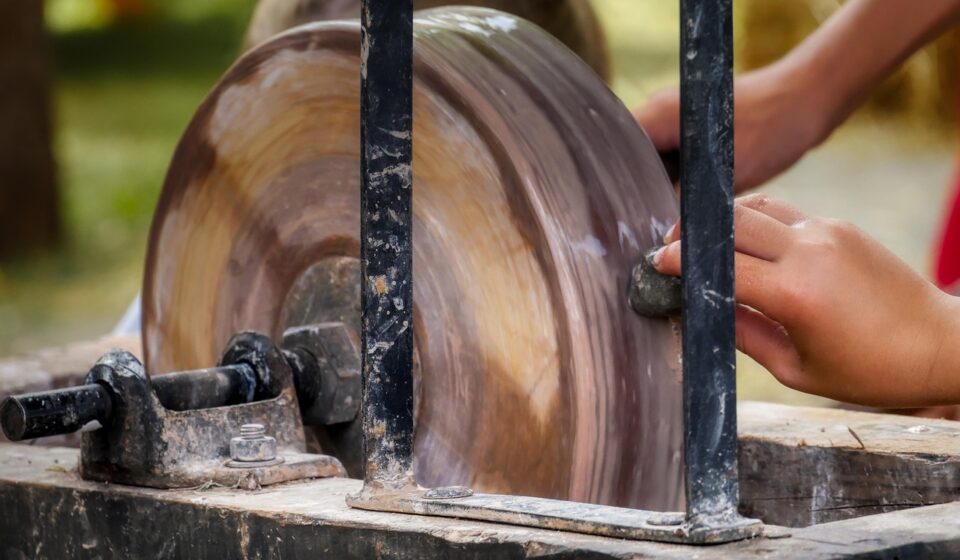
A grinder machine removes material with an abrasive wheel rather than a single cutting edge. In precision manufacturing, grinding is typically used when a part needs tighter dimensional accuracy, better surface finish, improved flatness or roundness, or a cleaner edge condition than the previous process can reliably deliver. The right machine is not necessarily the largest or most expensive model. It must fit the part shape, material hardness, tolerance requirement, production volume, wheel technology, coolant control, workholding method, and safety system.
In many shops, grinding is a finishing or semi-finishing operation after turning, milling, heat treatment, welding, or additive manufacturing. A shaft may be turned first and then cylindrical-ground to improve roundness. A die plate may be milled and heat-treated, then surface-ground to restore flatness. A cutting tool may be formed and sharpened on a tool and cutter grinder. In each case, the value of grinding comes from controlled stock removal and a repeatable surface condition.
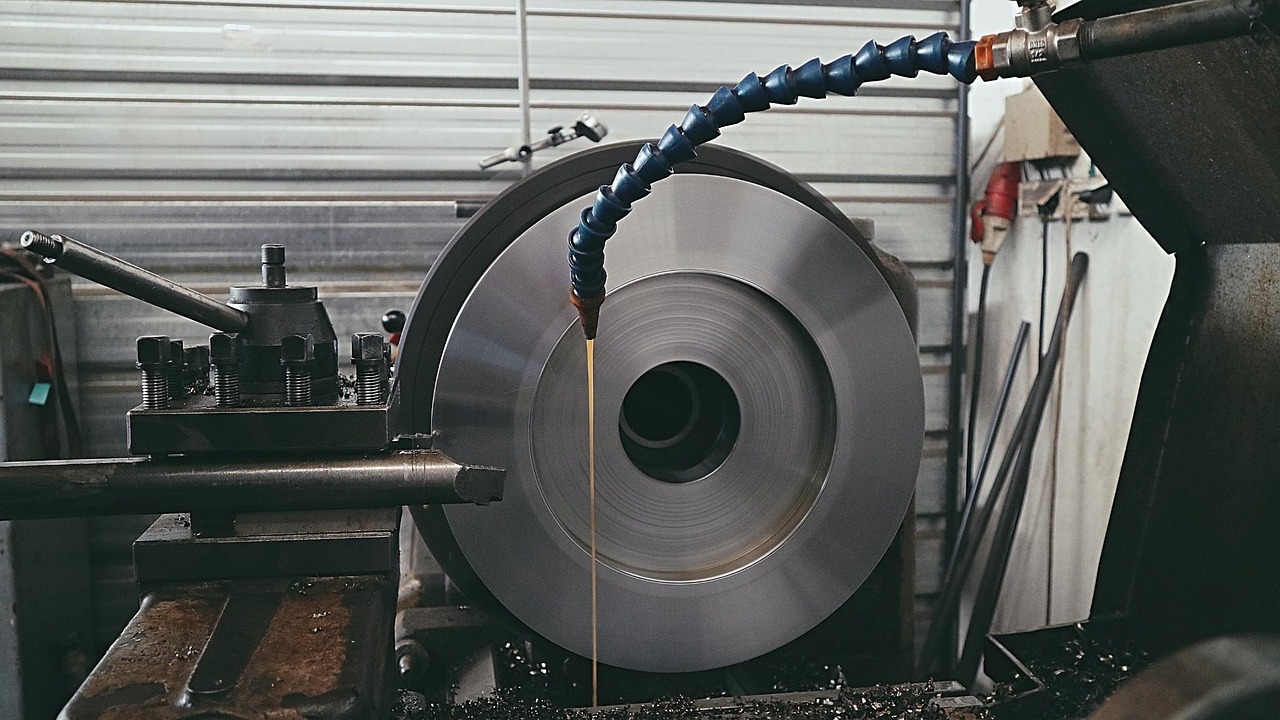
Readers comparing equipment across the wider machine tools category should treat grinding as a complete process system, not just as a standalone machine purchase. The machine base, spindle, wheel, dressing method, coolant delivery, filtration, fixturing, metrology, operator practice, and maintenance plan all influence the final result.
Main grinder machine types and where they fit
Different grinder designs solve different production problems. A surface grinder is not a substitute for a centerless grinder, and a tool grinder is usually not the most efficient way to finish high-volume shafts. The table below summarizes common grinder machine types used in metalworking and precision manufacturing.
| Grinder machine type | Typical workpieces | Best fit | Key limitation |
|---|---|---|---|
| Surface grinder | Plates, blocks, mold components, spacers, machine bases, fixture parts | Flatness, parallelism, smooth faces, small to medium batches | Less suitable for long cylindrical parts or continuous bar production |
| Cylindrical grinder | Shafts, pins, rollers, sleeves, bearing journals | Outside diameter, inside diameter, shoulders, tapers, and round features | Workholding and setup can be slower than centerless grinding for simple high-volume parts |
| Centerless grinder | Pins, rods, tubes, needles, small shafts, high-volume round parts | Fast production without centers or chucks | Not ideal for every stepped, shouldered, or complex part geometry |
| Tool and cutter grinder | End mills, drills, reamers, form tools, special cutting tools | Tool sharpening, tool manufacturing, complex cutting geometry | Requires strong programming, fixturing, and measurement control for complex tools |
| Creep-feed or profile grinder | Turbine parts, slots, forms, hardened profiles, deep features | Controlled removal of difficult profiles and hardened materials | Needs careful thermal control, wheel selection, and coolant delivery |
| Bench or pedestal grinder | Deburring, rough sharpening, maintenance work | General workshop support | Not a precision production grinder for controlled geometry |
A practical selection process starts by sorting the workpiece into three broad geometry groups: flat, round, or shaped. Flat work usually points toward a surface grinder. Round work usually points toward cylindrical or centerless grinding. Complex cutting edges, forms, or multi-axis features point toward tool, cutter, profile, or CNC grinding equipment.
Match the machine to geometry, tolerance, and production volume
The first buying question should be simple: what must the finished part prove during inspection? A drawing may call for diameter, flatness, parallelism, concentricity, surface roughness, roundness, or profile accuracy. Each requirement can push the machine choice in a different direction.
Flat parts and mold components
For plates, mold inserts, fixture blocks, and precision spacers, a surface grinder is often the most direct option. The workpiece is commonly held on a magnetic chuck or fixture while the grinding wheel passes over the surface. Important selection factors include table size, magnetic chuck quality, vertical feed resolution, spindle condition, wheel dressing method, and the machine’s ability to remain thermally stable during long finishing passes.
Shafts, rollers, and bearing journals
For round parts, a cylindrical grinder is generally used when the part has centers, shoulders, multiple diameters, tapers, or controlled relationships between features. Depending on the configuration, the machine may support outside diameter grinding, inside diameter grinding, plunge grinding, or traverse grinding. A CNC cylindrical grinder can reduce setup variation when a shop runs repeat part families or components with multiple diameter steps.
High-volume round parts
Centerless grinding is often selected for simple cylindrical parts that need to be produced quickly and consistently. Instead of holding the part between centers, the workpiece is supported between a grinding wheel, a regulating wheel, and a work rest blade. This arrangement can be efficient for pins, rods, and small shafts, but it is setup-sensitive. Blade height, regulating wheel angle, wheel condition, and part geometry all affect roundness and process stability.
One-off work versus repeat production
A manual grinder can still be valuable in toolrooms, repair departments, prototype shops, and maintenance operations where flexibility matters more than cycle time. CNC grinding becomes more compelling when the shop needs repeatable programs, automatic wheel dressing, multi-axis interpolation, in-process measurement, robotic loading, or documented process control. The decision should be based on repeatability and part mix, not on automation for its own sake.
Wheel, dressing, and coolant choices affect the result
A grinder machine cannot perform beyond the process conditions around it. Wheel specification, dressing practice, coolant delivery, and filtration often determine whether the machine produces stable parts or creates heat damage, taper, chatter, and inconsistent finish.
Grinding wheels are selected by abrasive type, grit size, bond, grade, structure, and wheel shape. Aluminum oxide wheels are widely used for steels. Silicon carbide is commonly applied to cast iron and some non-ferrous or brittle materials. CBN wheels are often selected for hardened ferrous materials where wheel life and thermal control are important. Diamond wheels are commonly used for carbide, ceramics, and other hard non-ferrous materials. These are general starting points; the final wheel choice should be confirmed with the wheel supplier and checked against material condition, machine power, coolant method, and finish target.
Dressing and truing are just as important as the wheel itself. Truing restores wheel geometry so it runs accurately. Dressing opens the wheel surface and exposes sharp abrasive grains. If dressing is neglected, the wheel can load, rub instead of cut, generate excess heat, and leave a poor surface finish. If dressing is too aggressive, wheel life and dimensional stability may suffer. Modern CNC grinders often integrate dressing cycles into the program, while manual machines rely more heavily on operator judgment.
Coolant is another major control point. Grinding creates heat in a small contact zone, and poor coolant delivery can lead to grinding burn, metallurgical change, residual stress, or cracking in sensitive parts. Flow direction, nozzle position, filtration, concentration, temperature control, and sump maintenance should be evaluated before a machine is purchased. A grinder with a strong spindle and a weak coolant system may still fail in demanding production.
Safety and standards should be part of the specification
Grinding involves high wheel speed, sparks, abrasive dust, rotating components, and stored energy in the wheel. Safety should not be treated as an accessory. In the United States, OSHA’s abrasive wheel machinery rule, 29 CFR 1910.215, addresses guarding and related requirements for abrasive wheel equipment. OSHA guidance also emphasizes checking wheel and machine speed compatibility and inspecting or ring-testing certain wheels before mounting. Internationally, ISO 16089:2025, published as the second edition in February 2025, specifies safety requirements and risk reduction measures for stationary grinding machines, including manually controlled and numerically controlled machines.
When evaluating a grinder, buyers should look beyond catalog cutting capacity. Check whether the machine includes suitable guards, interlocked doors where appropriate, emergency stops, wheel burst protection, a defined spindle braking strategy, mist extraction provisions, spark containment, and safe access for dressing and maintenance. For older used machines, a safety review is especially important because legacy equipment may not reflect current guarding expectations or modern risk assessment practice. See also: cnc and robotics.
Operator training also matters. A wheel with an incorrect speed rating, damaged structure, poor mounting, missing guard, or unsuitable flange can create serious hazards. Personal protective equipment is important, but it does not replace proper machine guarding, wheel inspection, correct mounting, and safe operating procedures.
A practical buying checklist for machine shops
The best grinder machine for a shop is the one that can repeatedly meet the drawing, inspection method, and production schedule with acceptable risk and cost. Before comparing brands or prices, define the process requirements in writing.
- Workpiece geometry: Is the work mainly flat, cylindrical, internal, external, centerless, profiled, or tool-related?
- Material and hardness: Will the machine grind mild steel, hardened steel, stainless steel, cast iron, carbide, ceramics, or mixed materials?
- Inspection requirements: Which features must be measured: size, roundness, flatness, parallelism, concentricity, surface roughness, or form?
- Batch size: Is the work one-off, low-volume, repeat-batch, or continuous production?
- Control method: Is manual control sufficient, or does the process need CNC programs, automatic dressing, probing, or in-process gauging?
- Workholding: Does the part require a magnetic chuck, centers, chucking, steady rests, vacuum workholding, custom fixtures, or centerless support?
- Wheel system: Are suitable wheel sizes, abrasives, flanges, balancing systems, and dressing tools readily available?
- Coolant and filtration: Can the system control heat, remove swarf, and maintain consistent fluid condition?
- Floor and environment: Does the machine need vibration isolation, temperature control, mist collection, or special foundation work?
- Service and skills: Can the shop support spindle maintenance, alignment checks, dressing setup, operator training, and spare parts?
Total cost includes more than the purchase price. Wheels, dressing tools, coolant, filtration media, fixturing, measurement equipment, training, downtime, maintenance, and scrap risk can all influence the real cost of grinding. A lower-priced machine may become expensive if it cannot hold size after warm-up, lacks parts support, or requires excessive operator intervention.
Common mistakes when selecting a grinder machine
One common mistake is buying on advertised accuracy alone. Published specifications are useful, but they do not guarantee results on every part. Workpiece material, wheel condition, coolant, fixturing, thermal drift, inspection method, and operator practice all affect the measured outcome.
Another mistake is confusing capability with capacity. A machine may physically fit a part but still lack the spindle power, rigidity, travel accuracy, dressing control, or coolant delivery needed for stable production. This is especially important in creep-feed, profile, and hardened material applications where heat management is critical.
Shops also underestimate workholding. A high-quality grinder cannot compensate for a poor fixture. Magnetic chucks must be flat and suitable for the part. Centers must be accurate. Centerless setups require precise support geometry. Thin parts may distort during clamping or heating. If the part moves, springs, or distorts, the machine specification alone will not solve the problem.
Finally, some buyers select CNC too quickly, while others wait too long. CNC is not automatically better for occasional repair work or simple toolroom jobs. For repeat families, multi-step cylindrical parts, complex tools, and processes requiring automatic dressing or measurement feedback, however, CNC can improve consistency and reduce dependence on manual adjustment.
Frequently asked questions
What is the difference between a grinder machine and a milling machine?
A milling machine removes material with a rotating cutting tool that has defined cutting edges. A grinder machine removes material with abrasive grains bonded into a wheel or another abrasive tool. Milling is often used for shaping and rough to semi-finish machining, while grinding is commonly used for fine finishing, hardened materials, and tighter control of surface condition or geometry.
Which grinder machine is most versatile for a small machine shop?
For general flat work, fixture making, and toolroom support, a manual surface grinder is often one of the most versatile choices. However, a shop focused on shafts may benefit more from a cylindrical grinder, while a shop sharpening or producing cutting tools may need a tool and cutter grinder. The most versatile machine depends on the work mix.
Do all precision grinding jobs require CNC?
No. Skilled operators can achieve excellent results on manual grinders when the part geometry and batch size are suitable. CNC becomes more valuable when repeatability, documentation, complex geometry, automatic dressing, or production throughput are required.
How often should a grinding wheel be dressed?
There is no universal interval. Dressing frequency depends on material, wheel specification, stock removal, finish target, coolant, and signs of wheel loading or loss of form. Production processes should define dressing intervals based on measured part quality, surface condition, and wheel behavior.
Can one grinder machine handle every grinding operation?
Not efficiently. Some machines can perform multiple operations with attachments, but flat grinding, cylindrical grinding, centerless grinding, tool grinding, and profile grinding have different mechanical and process requirements. A shop should choose the machine around its most important recurring parts rather than expecting one grinder to solve every application.
Conclusion
Choosing a grinder machine is a process engineering decision. Start with the part geometry, inspection requirements, material condition, and production volume. Then compare machine structure, control type, wheel system, dressing method, coolant delivery, workholding, safety features, and service support. A well-matched grinder can improve precision, surface quality, and repeatability; a poorly matched one can create heat damage, setup delays, scrap, and safety risk. For most machine shops, the strongest decision comes from matching the grinder to a defined family of parts rather than buying by headline specifications alone.