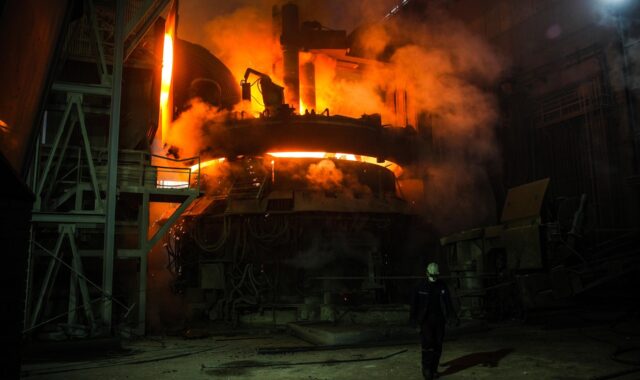
Manufacturing and assembly in modern production systems
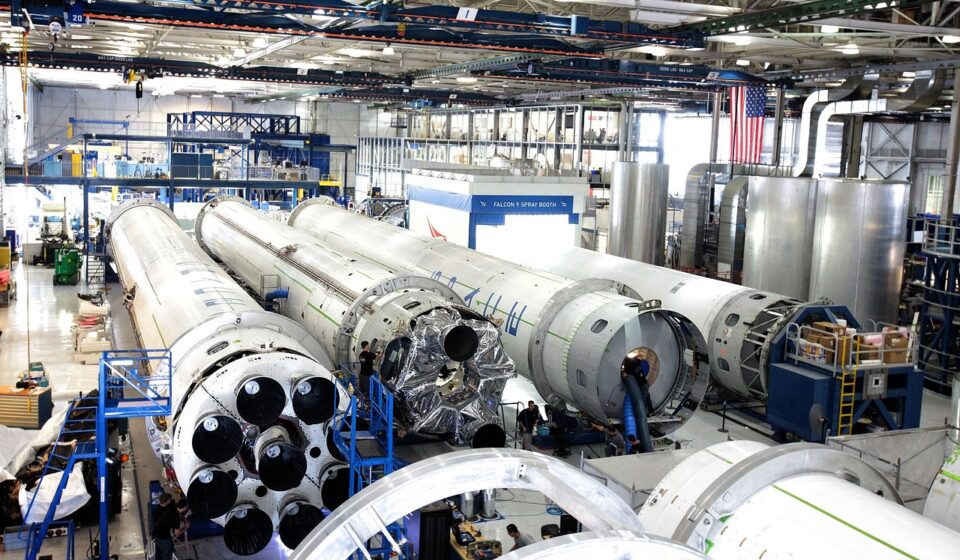
How manufacturing and assembly work together
Manufacturing and assembly describe two connected parts of the production system. Manufacturing transforms raw materials, components, or semi-finished inputs through processes such as machining, forming, molding, fabrication, heat treatment, coating, or additive manufacturing. Assembly joins manufactured or purchased parts into a functional product, subassembly, module, or machine.
In practice, the two activities cannot be managed as isolated departments. A part that is difficult to machine, hard to inspect, or sensitive to handling can slow the assembly line. Assembly requirements can also affect upstream decisions on tolerances, surface finish, fastener selection, and production sequencing.
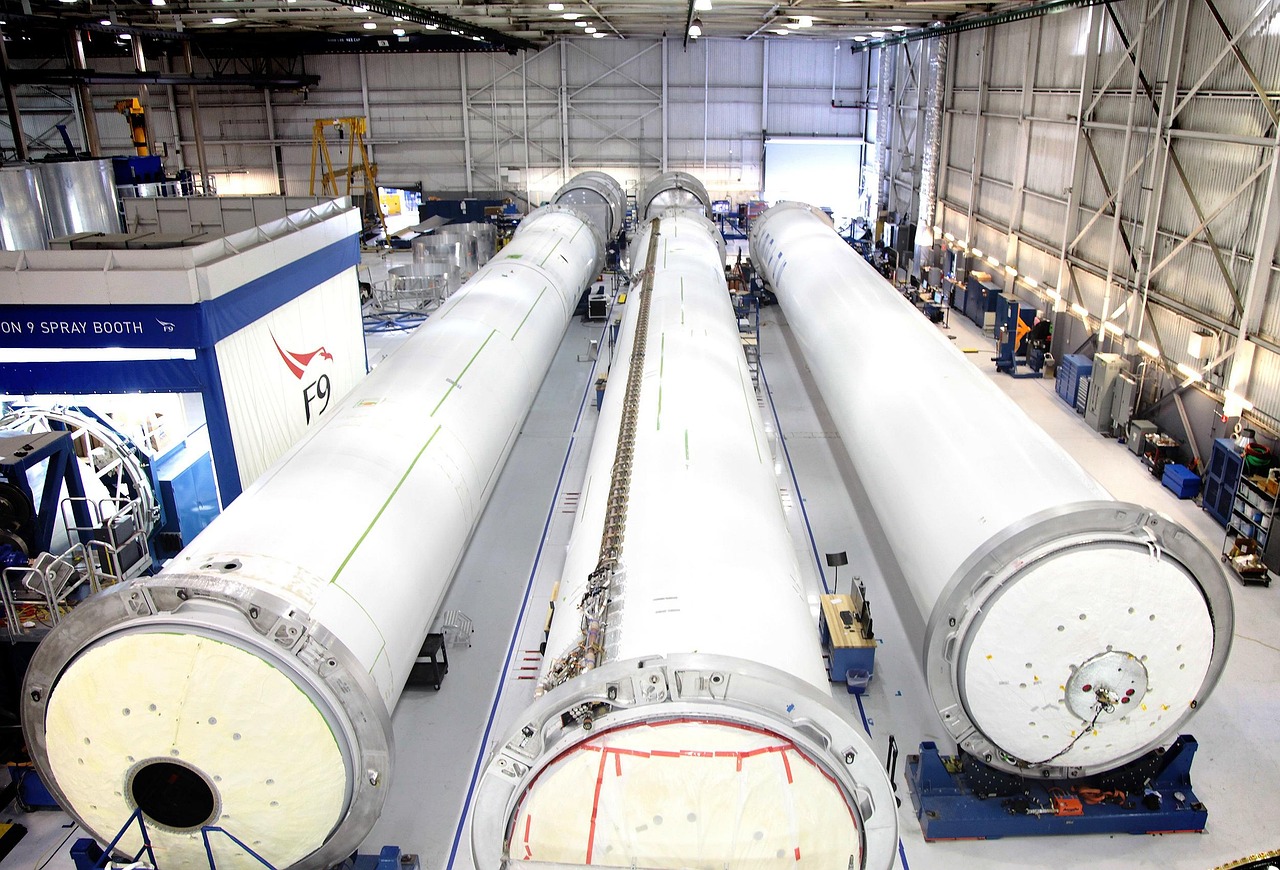
For manufacturers, the more useful question is not whether manufacturing or assembly is more important. It is how design, process planning, production control, quality assurance, and supply chain coordination can connect both stages with fewer handoff errors. Many modern factories therefore manage manufacturing and assembly as one integrated flow, rather than as disconnected work centers. For more related production topics, see the manufacturing processes section.
Manufacturing versus assembly
The difference between manufacturing and assembly is easiest to understand by looking at the type of change made to the product. Manufacturing usually changes material form, geometry, properties, or surface condition. Assembly usually changes product configuration by joining parts together.
The boundary is not always clean. Welding can be both a fabrication process and an assembly method. Overmolding can form a plastic feature while joining it to another part. A press-fit bearing operation may be classified as assembly, but its success still depends on precisely manufactured shaft and housing dimensions.
| Aspect | Manufacturing | Assembly |
|---|---|---|
| Main purpose | Create or modify parts, materials, and features | Join parts into subassemblies or finished products |
| Typical inputs | Raw material, castings, forgings, sheets, bars, powders, blanks | Manufactured parts, purchased components, fasteners, electronics, seals |
| Typical controls | Process parameters, tooling, machine capability, material condition | Work instructions, sequence, torque, fit, alignment, traceability |
| Common risks | Dimensional variation, tool wear, material defects, surface damage | Wrong part, missed step, poor fit, handling damage, incomplete test |
| Quality evidence | Inspection records, process data, material certificates, capability studies | Checklist records, test results, torque data, serial number traceability |
From an operational point of view, this distinction matters because each stage has different failure modes. A machining cell may need statistical process control and tool-life monitoring. A final assembly station may need error-proofing, barcode verification, torque-angle recording, and functional testing. A single generic control plan can leave important risks uncovered.
The end-to-end flow from design to final build
A reliable production system starts before any machine is running. Design decisions influence whether manufacturing and assembly will be stable, repeatable, and cost-effective. A design with unnecessary part count, inaccessible fasteners, tight tolerances without functional need, or mixed material choices can create cost and quality problems that shop-floor improvement alone cannot fully remove.
A typical end-to-end flow includes several linked steps:
- Product definition: Engineering defines function, materials, critical dimensions, performance requirements, regulatory constraints, and expected production volume.
- Design for manufacturing and assembly review: Teams assess whether parts can be produced consistently and whether the final product can be assembled with minimal rework, special handling, or unclear operator judgment.
- Process planning: Planners select equipment, tooling, fixtures, joining methods, inspection points, routing, and work instructions.
- Supplier and material control: Purchased parts, raw materials, and outsourced processes are qualified, inspected, and traced where required.
- Part manufacturing: Components are produced using controlled parameters and verified against drawings, models, specifications, or customer requirements.
- Subassembly and final assembly: Parts are joined in a defined sequence, with checks for fit, function, safety, and configuration accuracy.
- Testing, packaging, and release: The finished product is inspected, function-tested where necessary, protected for shipping, and released with the required records.
This sequence may look linear, but real production is often iterative. Assembly feedback may show that a chamfer should be added, a tolerance stack should be adjusted, a connector should be repositioned, or a fixture should be redesigned. Companies that learn quickly tend to make this feedback visible, instead of treating it as informal troubleshooting.
Quality control across manufacturing and assembly
Quality control is not just final inspection. In an integrated production system, quality is built into manufacturing and assembly at multiple decision points. ISO 9001:2015 is often used as a reference framework because it emphasizes a process approach, risk-based thinking, documented information, control of production and service provision, monitoring, measurement, and continual improvement. The practical lesson is that a manufacturer should understand which process inputs affect outputs and how those inputs are controlled.
In manufacturing operations, quality risks often come from machine condition, tool wear, material variation, temperature, operator setup, program version, fixture wear, or inadequate inspection frequency. Common controls include first article inspection, in-process gauging, calibrated measurement equipment, machine maintenance, approved setup sheets, process capability analysis, and nonconforming material controls.
In assembly operations, quality risks are more often related to sequence, identification, orientation, torque, fit, cleanliness, handling, and verification. Controls may include kitting, pick-to-light systems, poka-yoke fixtures, torque monitoring, serialized components, visual work instructions, leak testing, electrical testing, and final functional checks.
Why tolerance stack-up matters
Tolerance stack-up is one of the main reasons manufacturing and assembly must be planned together. Each manufactured part may be within its individual tolerance, yet the final assembly may still bind, leak, misalign, vibrate, or fail a functional test. This is especially important in gearboxes, pumps, precision frames, electronics housings, medical devices, aerospace structures, and any product with multiple interfaces.
Good practice is to identify critical-to-quality interfaces early and control the dimensions that drive final performance, rather than applying tight tolerances everywhere.
Why traceability matters
Traceability links a finished product to parts, materials, process conditions, inspections, operators, equipment, and test records. Not every product requires the same level of traceability, but regulated sectors and safety-critical industries often need stronger records. Even in less regulated markets, traceability can reduce the cost of containment when a supplier issue, tooling change, or process deviation is discovered.
Digital tools are changing the handoff between production stages
Digital manufacturing is not simply the use of computers on the shop floor. Manufacturing.gov describes digital manufacturing as the integration and use of data from design, production, and product use to improve product, process, and enterprise performance. For manufacturing and assembly, this matters because many defects originate at handoff points, including drawing revisions, routing changes, part substitutions, missing inspection records, and undocumented process adjustments.
Several digital practices are especially relevant: See also: cnc and robotics.
- Digital work instructions reduce the risk of outdated paper instructions and can show operators the correct part orientation, tool setting, or inspection step.
- Manufacturing execution systems connect schedules, work orders, equipment status, operator actions, and quality records.
- Barcode or RFID verification helps confirm that the right part is used in the right build at the right station.
- Digital thread initiatives aim to connect data across design, manufacturing, assembly, inspection, service, and product support. NIST has described this as a priority for smart manufacturing systems.
- Advanced analytics can reveal patterns in scrap, rework, downtime, torque failures, leak failures, or warranty returns that are difficult to see from isolated spreadsheets.
The World Economic Forum’s Global Lighthouse Network has also highlighted the role of scaled digital technologies in productivity, resilience, customer responsiveness, sustainability, and workforce development. This does not mean every manufacturer needs the same technology stack. A small job shop, contract assembler, and high-volume automotive supplier will have different needs. The common principle is that useful digital tools should be tied to measurable production problems, not adopted as decoration.
Design for manufacturing and assembly decisions that reduce waste
Design for manufacturing and assembly, often shortened to DFMA, is a practical way to reduce waste before it reaches the factory floor. The goal is not to simplify every design at the expense of performance. The goal is to avoid complexity that does not improve function, reliability, safety, serviceability, or customer value.
Useful DFMA questions include:
- Can the number of separate parts be reduced without increasing manufacturing risk?
- Can symmetric or self-locating features prevent incorrect orientation during assembly?
- Are fasteners standardized where possible, or does each station need different tools and hardware?
- Are critical dimensions controlled at the features that actually affect fit and function?
- Can parts be handled, cleaned, inspected, and packaged without damaging critical surfaces?
- Can the assembly sequence be performed safely and ergonomically?
- Are service and repair needs considered, especially for industrial equipment and long-life products?
A strong DFMA review includes people from engineering, manufacturing, assembly, quality, purchasing, maintenance, and sometimes suppliers. Each group sees a different risk. Engineering may focus on functional requirements; machining may see tool access issues; assembly may identify handling difficulty; quality may see inspection ambiguity; purchasing may understand supplier constraints. The value comes from bringing those perspectives together before the design is frozen.
Common bottlenecks and how to address them
Bottlenecks in manufacturing and assembly are not always located where managers first look. A slow final assembly line may be caused by late parts, high variation from a machining process, unclear instructions, poor fixture design, or too many product variants released without adequate planning. The visible constraint is often only the symptom.
| Bottleneck | Likely root causes | Practical response |
|---|---|---|
| Frequent assembly rework | Poor fit, missed steps, unclear instructions, supplier variation | Review tolerance stack-up, update work instructions, add error-proofing, improve incoming controls |
| Parts waiting before assembly | Unbalanced routing, long changeovers, batch size mismatch | Map lead times, reduce setup time, align batch policy with assembly demand |
| High scrap in part production | Tool wear, unstable process parameters, material variation | Use in-process checks, maintenance triggers, and capability studies |
| Incorrect components installed | Weak kitting, similar-looking parts, poor labeling | Use barcode verification, visual controls, and separated storage locations |
| Final test failures | Upstream variation, hidden defects, late discovery of functional issues | Move key checks earlier, analyze failure patterns, connect test data to process records |
One useful improvement method is to follow a defect backward from final inspection to the earliest point where it could have been prevented or detected. If a leak is found at final test, the answer may not be more final testing. The better answer may be improved surface finish control, seal handling, torque sequence, cleanliness, or supplier packaging.
What manufacturers should measure
Measurement should connect operational activity to customer value. Too many indicators create noise, while too few hide important problems. For an integrated manufacturing and assembly system, useful measures may include first-pass yield, scrap rate, rework hours, on-time completion, schedule adherence, changeover time, overall equipment effectiveness, defect escape rate, customer returns, supplier quality, and cost of poor quality.
It is also important to measure flow, not only individual station efficiency. A machining center can show high utilization while starving assembly of the parts needed most urgently. A final assembly cell can appear inefficient if upstream variation forces operators to sort, adjust, or wait. Metrics should therefore be reviewed across the full value stream, from incoming material to finished product release.
Manufacturers should also separate facts, source opinions, and internal analysis. A machine log, inspection result, and test record are facts. A supplier’s explanation of a defect is a source statement. A root cause conclusion is an analysis that should be supported by evidence. Keeping these categories clear helps teams avoid solving the wrong problem.
Frequently asked questions
Is assembly considered part of manufacturing?
Yes. Assembly is commonly treated as part of the broader manufacturing system because it converts parts and components into a usable product. However, it has its own methods, risks, tools, and quality controls, so it should not be managed exactly like machining, molding, casting, or forming.
What is the main difference between fabrication and assembly?
Fabrication usually creates parts or structures by cutting, bending, welding, machining, or forming material. Assembly joins fabricated or purchased parts into a larger unit. Some operations, such as welding, can belong to both categories depending on the product and process plan.
Why is design for assembly important?
Design for assembly reduces avoidable handling, orientation errors, excessive fastener variety, hard-to-reach joints, and unclear build sequences. It can improve quality and lead time because assembly problems are often expensive to fix after parts are already manufactured.
How do digital systems improve manufacturing and assembly?
Digital systems improve visibility across design revisions, work orders, inspection records, equipment data, and assembly verification. Their value comes from reducing handoff errors and making production problems easier to trace, not from technology adoption alone.
What should be improved first in an unstable production line?
Start with the problem that most affects customer delivery, safety, quality, or cost. Map the value stream, identify where defects or delays are first created, and fix the earliest controllable cause rather than adding more inspection at the end.