Metal manufacturing processes and how to choose the right method
What metal manufacturing processes include
Metal manufacturing processes are the methods used to turn metal stock, molten metal, powder, sheet, bar, plate, or wire into usable parts. The main families are casting, forming, machining, joining, heat treatment, surface finishing, and additive manufacturing. No single process is automatically the best choice. The right route depends on part geometry, alloy behavior, tolerance, production volume, surface requirements, cost targets, safety controls, and downstream inspection needs.
In real factories, a finished component usually passes through more than one operation. A casting, for example, may be heat treated, CNC machined, deburred, coated, inspected, and then assembled. For readers comparing broader manufacturing processes, metals are a useful example because they show how material science, tooling, equipment capability, and quality control have to work together.
Primary shaping processes create the basic metal form
Primary shaping processes establish the near-final shape of a part before finishing operations. They are usually selected early in product and process planning because they affect grain structure, defect risk, dimensional variation, scrap rate, tooling cost, and lead time.
Casting
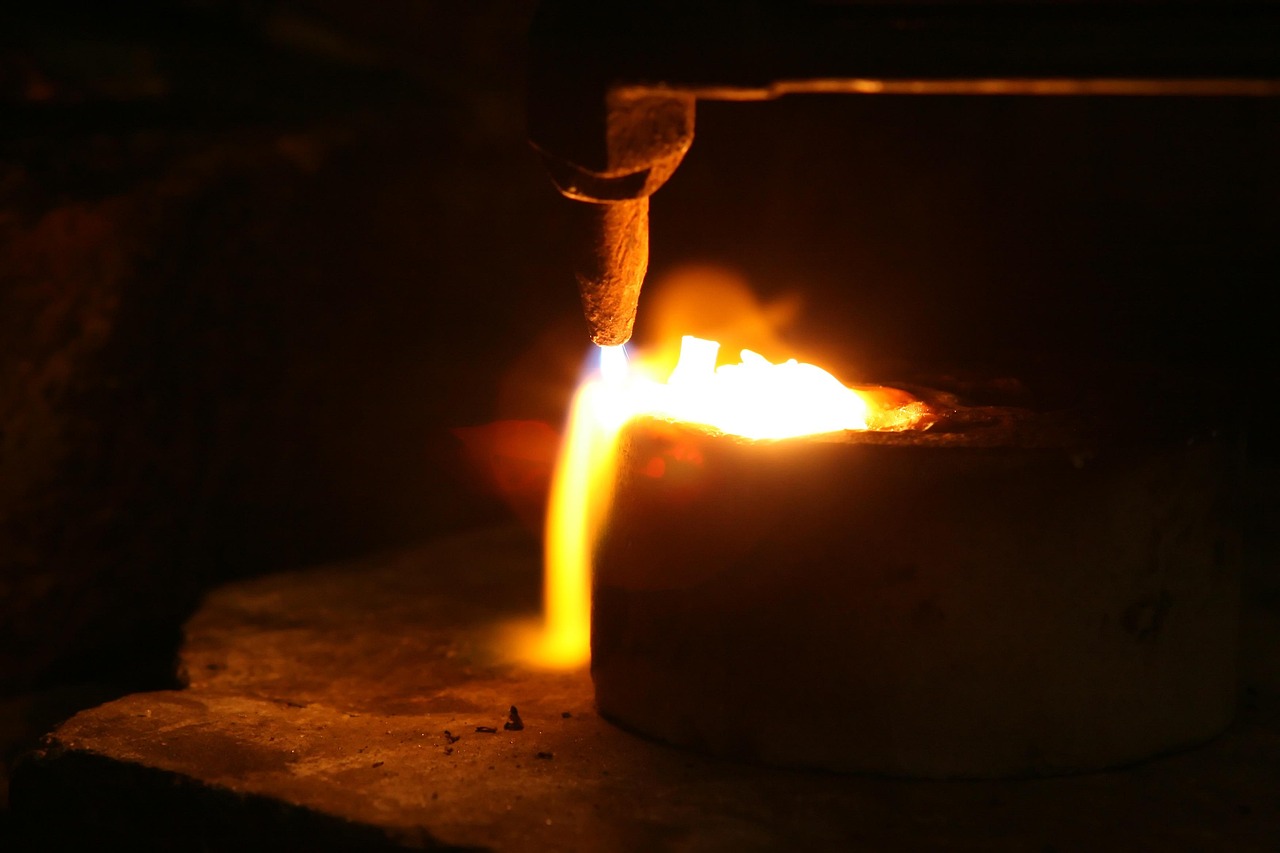
Casting pours or injects molten metal into a mold cavity and allows it to solidify. It is often used for complex shapes, internal cavities, large components, and alloys that are difficult to form by deformation. Common variants include sand casting, investment casting, permanent mold casting, die casting, and centrifugal casting.
The main trade-off is process control. Casting must manage shrinkage, porosity, inclusions, mold quality, and solidification behavior. Many cast parts also require machining on functional surfaces because as-cast dimensions and finishes may not meet final requirements.
Forming
Forming changes the shape of solid metal through plastic deformation instead of cutting material away. Forging, rolling, extrusion, drawing, stamping, bending, and deep drawing all fall into this broad family. Forming can improve directional strength and material utilization, especially at higher volumes.
Successful forming depends on die design, press capacity, lubrication, temperature control, and the ductility of the selected alloy. A part that looks simple in CAD can still be difficult to form if it has severe bends, high springback, thin walls, or features that concentrate strain.
Additive manufacturing
Metal additive manufacturing builds parts layer by layer from powder, wire, or other feedstock. Public technical references from NIST and ISO/ASTM terminology describe categories such as powder bed fusion and directed energy deposition as important metal additive approaches.
The strength of additive manufacturing is design freedom. Lattice structures, internal channels, low-volume complex parts, and repair applications can be practical when conventional tooling would be too costly. Its limits include machine cost, build rate, powder handling, residual stress, qualification requirements, surface roughness, and the frequent need for post-processing such as heat treatment, support removal, machining, and inspection.
Machining and cutting define accuracy and functional surfaces
Machining removes material to achieve geometry, tolerance, and surface finish. It can be used as the primary process for parts made from bar, plate, or billet, and as a secondary process after casting, forging, additive manufacturing, or welding.
Turning, milling, drilling, boring, broaching, grinding, electrical discharge machining, laser cutting, plasma cutting, and waterjet cutting each solve different manufacturing problems. CNC milling and turning are flexible and accurate for prototypes and production work. Grinding can produce fine finishes and tight dimensional control. Laser and plasma cutting are widely used for sheet and plate profiles, while waterjet cutting is useful when heat-affected zones must be avoided.
The central machining trade-off is between precision and material removal cost. Tighter tolerances, difficult alloys, deep pockets, thin walls, and hard materials usually increase cycle time, tool wear, fixturing complexity, and inspection effort. Good process planning separates critical features from noncritical surfaces. Not every face needs the same tolerance or finish, and over-specifying a drawing can add cost without improving performance.
Joining processes turn parts into assemblies
Many metal products are not made as one piece. They are assembled from cut, formed, cast, machined, or printed components. Joining processes include welding, brazing, soldering, adhesive bonding, riveting, bolting, clinching, and mechanical fastening. Selection depends on strength, service temperature, corrosion exposure, inspection access, repairability, distortion risk, and whether dissimilar metals are involved.
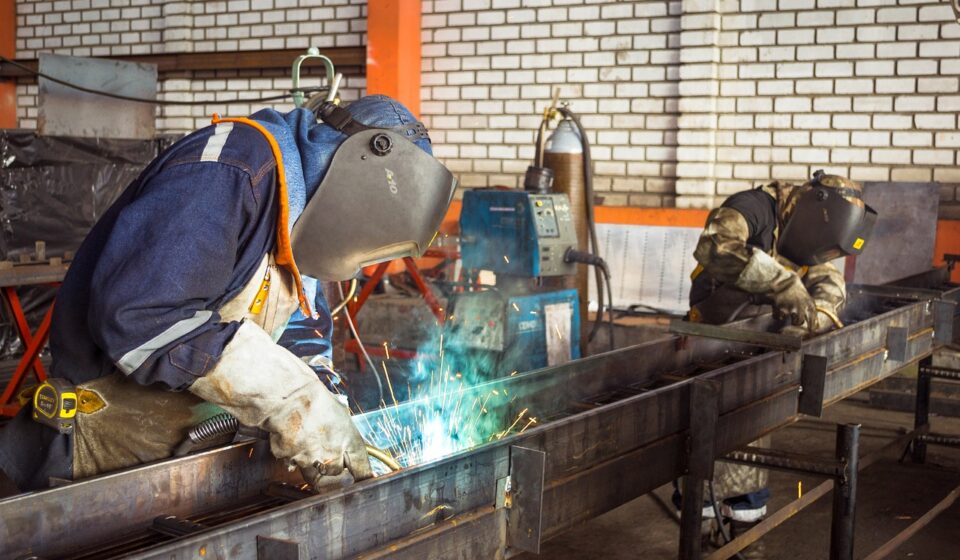
Welding is common because it can create strong permanent joints, but it also introduces heat. Heat can change microstructure, create residual stress, cause distortion, and require nondestructive testing in demanding applications. Brazing and soldering use filler metals and lower thermal input than many welding operations, but joint design and cleanliness are critical. Mechanical fastening is easier to inspect and disassemble, yet it adds holes, hardware, weight, and potential stress concentrations.
For engineers, the key question is not only whether a joint is strong enough. It is whether the joining method fits the full manufacturing route. A welded assembly may need machining after welding to restore flatness. A bolted joint may need surface treatment before assembly. A brazed part may need tight joint clearance that drives earlier forming or machining decisions.
Heat treatment and surface finishing change performance after shaping
Metal manufacturing rarely ends when the part reaches the right shape. Heat treatment and finishing steps often determine whether the component can survive its service environment.
Heat treatment
Heat treatment changes properties such as hardness, strength, toughness, ductility, wear resistance, and residual stress. Processes may include annealing, normalizing, quenching, tempering, solution treatment, aging, stress relieving, and case hardening. The correct route depends on alloy chemistry and service requirements. For example, a steel part may be hardened and tempered, while an aluminum alloy may require solution heat treatment and aging. These operations must be controlled carefully because time, temperature, cooling rate, atmosphere, and section thickness can all affect the final result. See also: cnc and robotics.
Surface finishing
Surface finishing improves appearance, corrosion resistance, friction behavior, cleanliness, coating adhesion, or wear performance. Common methods include deburring, polishing, blasting, tumbling, passivation, anodizing, electroplating, painting, powder coating, black oxide, and conversion coating.
Finishing may seem secondary, but it can become a major quality driver. Sharp burrs can interfere with assembly and safety. Poor cleaning can cause coating failure. Inadequate corrosion protection can shorten product life even when the base metal is strong enough.
Process comparison for practical selection
The following table summarizes how major process families differ. It is not a substitute for engineering validation, but it helps explain why process choice should start with part function rather than equipment preference.
| Process family | What it does best | Typical limitations | Common follow-up steps |
|---|---|---|---|
| Casting | Complex shapes, internal cavities, large or near-net metal parts | Porosity, shrinkage, dimensional variation, mold and solidification control | Heat treatment, machining, cleaning, inspection, coating |
| Forming | High material efficiency, strong directional properties, sheet and bulk shapes | Tooling cost, springback, die wear, formability limits | Trimming, machining, stress relief, surface finishing |
| Machining | Tight tolerances, accurate holes, flatness, precision surfaces | Scrap, tool wear, cycle time, fixturing complexity | Deburring, cleaning, inspection, coating |
| Joining | Assemblies, large structures, mixed manufacturing routes | Distortion, joint inspection, fatigue behavior, corrosion at interfaces | Machining, stress relief, leak testing, surface protection |
| Additive manufacturing | Complex low-volume geometry, internal channels, lightweight structures, repair | Build rate, powder or wire control, residual stress, qualification burden | Support removal, heat treatment, machining, surface finishing, inspection |
| Finishing and coating | Corrosion protection, appearance, surface texture, wear control | Cleaning sensitivity, coating thickness variation, environmental controls | Final inspection, packaging, assembly |
How engineers choose a metal manufacturing route
A sound process decision normally balances five factors: geometry, material, volume, tolerance, and risk. Geometry determines whether the part can be cast, formed, machined economically, printed, or assembled from simpler pieces. Material determines melting behavior, machinability, formability, weldability, heat treatment response, corrosion behavior, and availability. Volume determines whether tooling investment is justified. Tolerance determines whether near-net shaping is enough or precision machining is required. Risk determines how much testing, documentation, traceability, and inspection the application needs.
Production volume is often misunderstood. Low volume does not always mean machining is best, and high volume does not always mean forming or casting is best. A low-volume aerospace bracket with internal channels may justify additive manufacturing. A high-volume part with strict cosmetic requirements may still require extensive finishing. A heavy casting may be economical in shape creation but expensive if it needs long machining time across multiple setups.
Design teams can reduce cost by involving manufacturing specialists before drawings are frozen. Early changes to wall thickness, corner radius, draft, hole location, weld access, datum structure, and surface finish callouts can simplify production. Late changes are more expensive because they may affect tooling, fixtures, CNC programs, inspection plans, and supplier qualification.
Quality, safety, and environmental controls should be built into the process
Metalworking involves hazards and compliance responsibilities that cannot be separated from process selection. OSHA machine guarding guidance identifies risks such as rotating parts, ingoing nip points, flying chips, and sparks around machinery. In practical terms, equipment choices should be reviewed together with guarding, lockout procedures, ventilation, coolant management, dust collection, personal protective equipment, and operator training.
Environmental controls also matter. EPA materials on metal production, fabrication, finishing, and pollution prevention point to issues such as air emissions, stormwater exposure, process chemicals, metal-bearing waste, and finishing operations. The exact requirement depends on jurisdiction, facility type, process chemistry, production scale, and discharge pathway. Because rules change and site conditions vary, manufacturers should verify current obligations with qualified environmental, health, and safety professionals rather than relying on generic process descriptions.
Quality control should be planned with the same discipline. Dimensional inspection, hardness testing, tensile testing, metallography, coating thickness checks, weld inspection, leak testing, and nondestructive examination may be needed depending on the part. The most reliable manufacturing route is usually the one that controls defects at the source and uses inspection to verify performance, not to sort good parts from bad parts after production.
Frequently asked questions
What are the main metal manufacturing processes?
The main metal manufacturing processes are casting, forming, machining, joining, additive manufacturing, heat treatment, and surface finishing. Most finished metal products use more than one of these methods.
Which metal manufacturing process is most accurate?
Precision machining and grinding are commonly used when tight tolerances and fine surfaces are required. However, accuracy depends on the machine, tooling, fixture, material stability, operator control, and inspection method. A process should be judged against the specific drawing requirements.
Is additive manufacturing replacing casting and machining?
No. Metal additive manufacturing is valuable for certain complex, low-volume, lightweight, or repair applications, but it often still needs machining, heat treatment, and inspection. Casting, forming, and machining remain essential because they are often faster or more economical for many production parts.
Why do metal parts need secondary operations?
Secondary operations improve accuracy, mechanical properties, surface condition, corrosion resistance, cleanliness, or assembly performance. A forged or cast part may be strong and near-net in shape, but it may still need machining, deburring, coating, or heat treatment before use.
How should a company choose between casting, machining, and forming?
Start with the part function, alloy, geometry, tolerance, volume, lead time, and inspection requirements. Casting is often useful for complex shapes, forming for efficient deformation at suitable volumes, and machining for precision features. Many successful routes combine all three at different stages.